
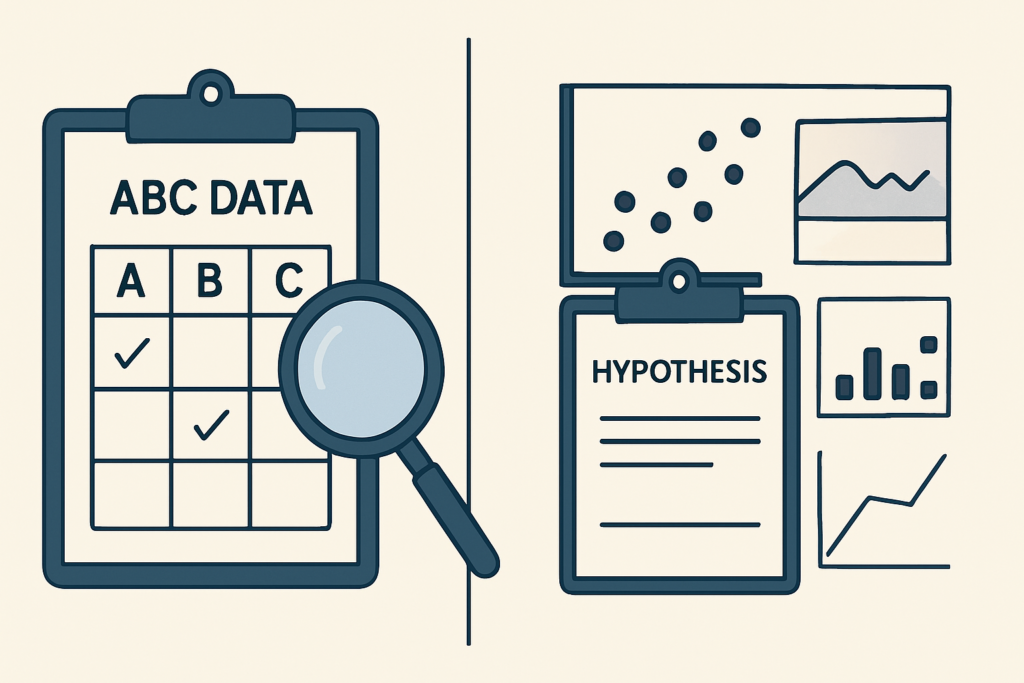
Understanding Functional Behavior Assessment is essential for any behavior analyst. This systematic process helps identify why behaviors occur by examining their relationship with environmental variables. For BCBA candidates, mastering FBA concepts is crucial for both exam success and effective clinical practice.
Table of Contents
- What is a Functional Behavior Assessment (FBA)?
- The Key Steps in the FBA Process
- FBA in Practice: Worked Examples for BCBA Candidates
- FBA on the BCBA Exam: Relevance and Common Traps
- Quick FBA Procedural Checklist
- Summary and Next Steps for Your Studies
What is a Functional Behavior Assessment (FBA)?
A Functional Behavior Assessment is a systematic process for identifying the environmental variables that maintain a target behavior. Unlike diagnostic assessments that focus on labeling, FBA examines the function or purpose of behavior within specific contexts.
Core Definition and Purpose
The primary purpose of FBA is to develop effective interventions by understanding the reinforcing consequences that maintain behavior. This approach aligns with the fundamental principle that behavior is lawful and influenced by environmental variables. FBA helps practitioners move beyond topography to understand the why behind behavior.
FBA vs. FA: A Critical Distinction for the Exam
Many candidates confuse FBA with Functional Analysis. FBA is a broader assessment process that includes both indirect and direct methods. In contrast, Functional Analysis specifically involves experimental manipulation of variables to test hypotheses. Understanding this distinction is essential for exam questions about assessment selection.
The Key Steps in the FBA Process
Conducting a thorough FBA follows a structured sequence. Each step builds upon the previous one to develop a comprehensive understanding of the behavior.
Step 1: Defining the Target Behavior
Begin with a clear, operational definition that is observable and measurable. This definition should allow different observers to record the behavior consistently. A well-defined target behavior is essential for reliable data collection throughout the assessment process.
Step 2: Gathering Information (Indirect & Direct Assessment)
Collect data using multiple methods to ensure comprehensive understanding:
- Indirect assessments include interviews, rating scales, and record reviews
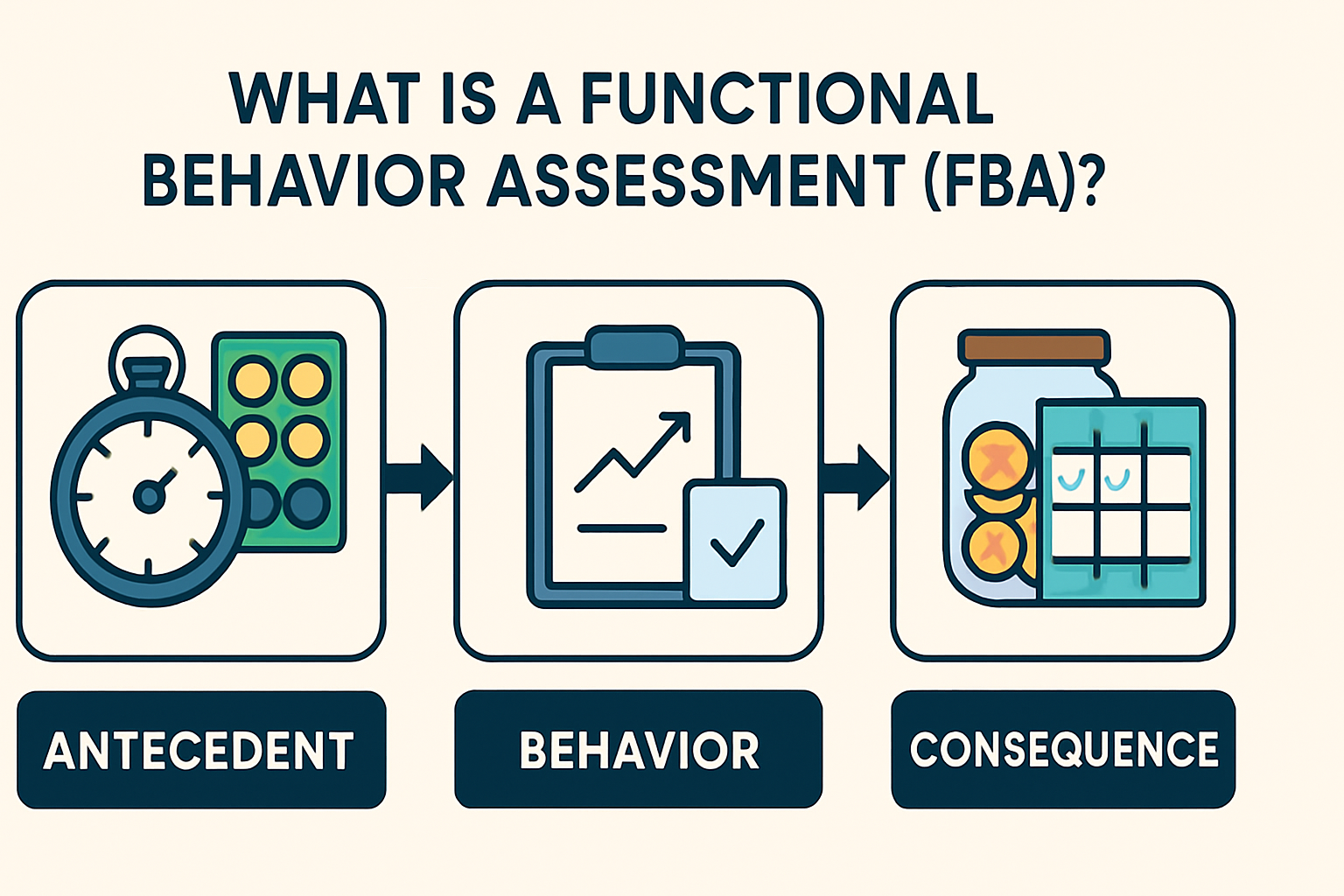
- Direct assessments involve observing and recording ABC data (Antecedent-Behavior-Consequence)
- Combine methods to triangulate findings and increase validity
Step 3: Analyzing Data and Forming a Hypothesis
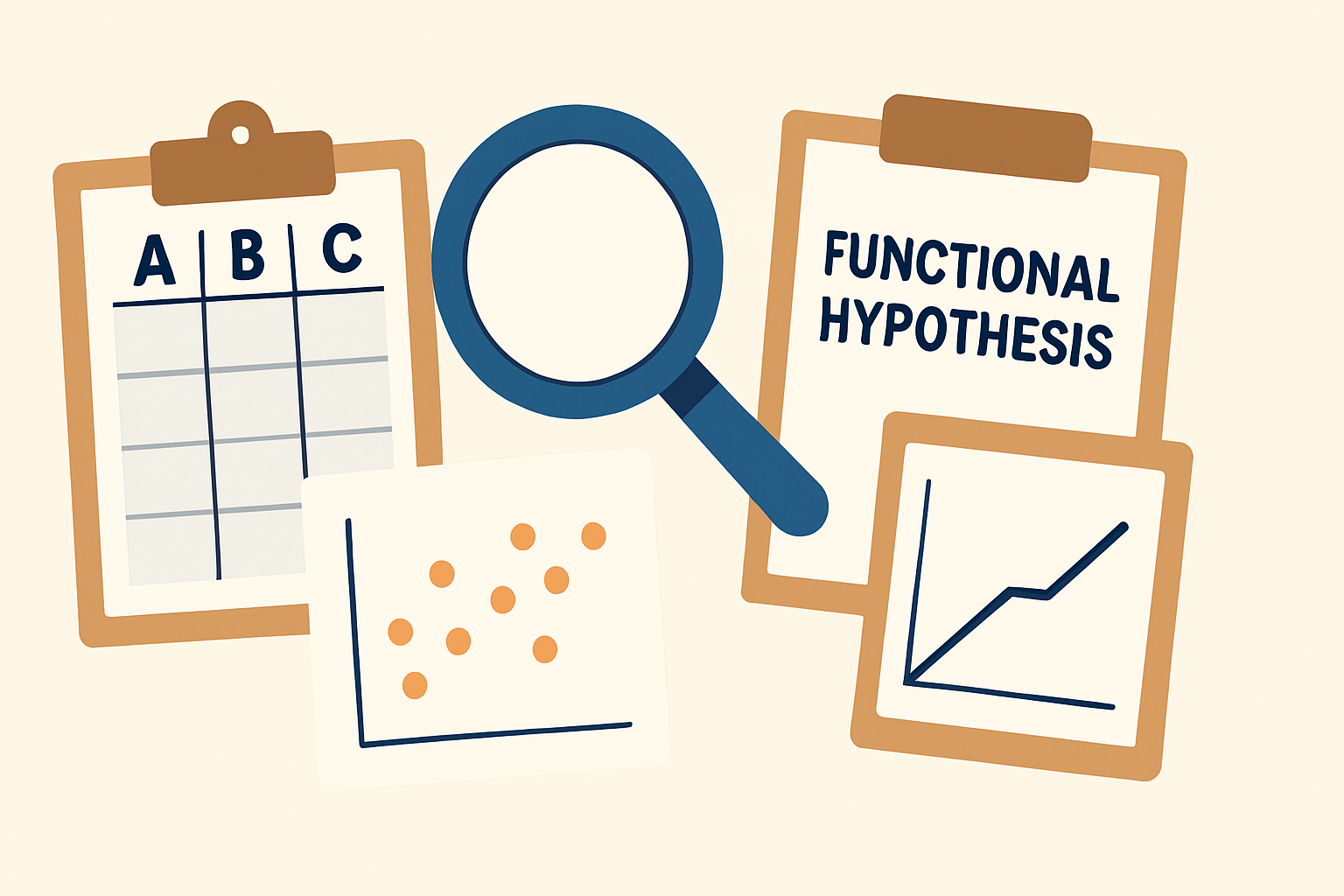
Synthesize collected data to identify patterns. Look for consistent antecedent conditions and consequent events that follow the behavior. Based on these patterns, develop a hypothesis about the likely function of the behavior, such as access to tangibles, escape, attention, or automatic reinforcement.
FBA in Practice: Worked Examples for BCBA Candidates
Applying FBA concepts to real scenarios helps solidify understanding. These examples demonstrate how to analyze behavior patterns and develop functional hypotheses.
Example 1: Elopement in the Classroom
ABC data shows elopement consistently occurs when difficult math worksheets are presented. The consequence is removal of the worksheet. The hypothesized function is escape from academic demands. This pattern suggests the behavior is maintained by negative reinforcement.
Example 2: Aggression During Play
Observations indicate aggression happens when peers have preferred toys. The consequence is obtaining the toy. The likely function is access to tangible items. This represents positive reinforcement through obtaining desired objects.
Example 3: Hand Mouthing During Downtime
Data shows hand mouthing increases during unstructured time with no social consequences. The hypothesized function is automatic sensory reinforcement. This type of behavior is maintained by internal sensory consequences rather than social mediation.
FBA on the BCBA Exam: Relevance and Common Traps
FBA knowledge is tested across multiple domains of the BCBA Test Content Outline. Understanding common exam traps can improve your performance.
How FBA Appears on the Task List
FBA concepts are embedded throughout the assessment and intervention sections. Key areas include behavior assessment (Section B), measurement (Section C), and intervention (Section F). Specific items address conducting assessments and developing function-based interventions.
Top 3 Exam Traps to Avoid
Watch for these common mistakes:
- Confusing behavior function (why it occurs) with topography (what it looks like)
- Selecting interventions before confirming the maintaining variable
- Misidentifying behaviors as attention-seeking when they’re actually maintained by automatic reinforcement
Quick FBA Procedural Checklist
Use this checklist to ensure you follow all essential FBA steps:
- Operationally define the target behavior
- Collect indirect assessment data through interviews
- Conduct direct observation using ABC recording
- Analyze patterns in antecedent conditions
- Identify consistent consequent events
- Develop a testable function hypothesis
- Consider conducting a functional analysis if needed
- Use findings to develop function-based interventions
Summary and Next Steps for Your Studies
Mastering Functional Behavior Assessment is fundamental to effective behavior analysis practice. The process provides a systematic approach to understanding behavior that informs ethical, effective interventions. For comprehensive assessment strategies, review our guide on assessment in ABA.
To strengthen your FBA skills, practice writing operational definitions and analyzing ABC data from case scenarios. Focus on distinguishing between the four primary functions of behavior and understanding when to use different assessment methods. Remember that effective intervention always begins with accurate assessment of the maintaining variables.
For additional study resources, explore the BCBA Test Content Outline and consider practicing with mock exams that include FBA scenarios. Consistent application of these concepts will prepare you for both exam questions and real-world clinical challenges.


