

Understanding Differential Reinforcement of Alternative Behavior
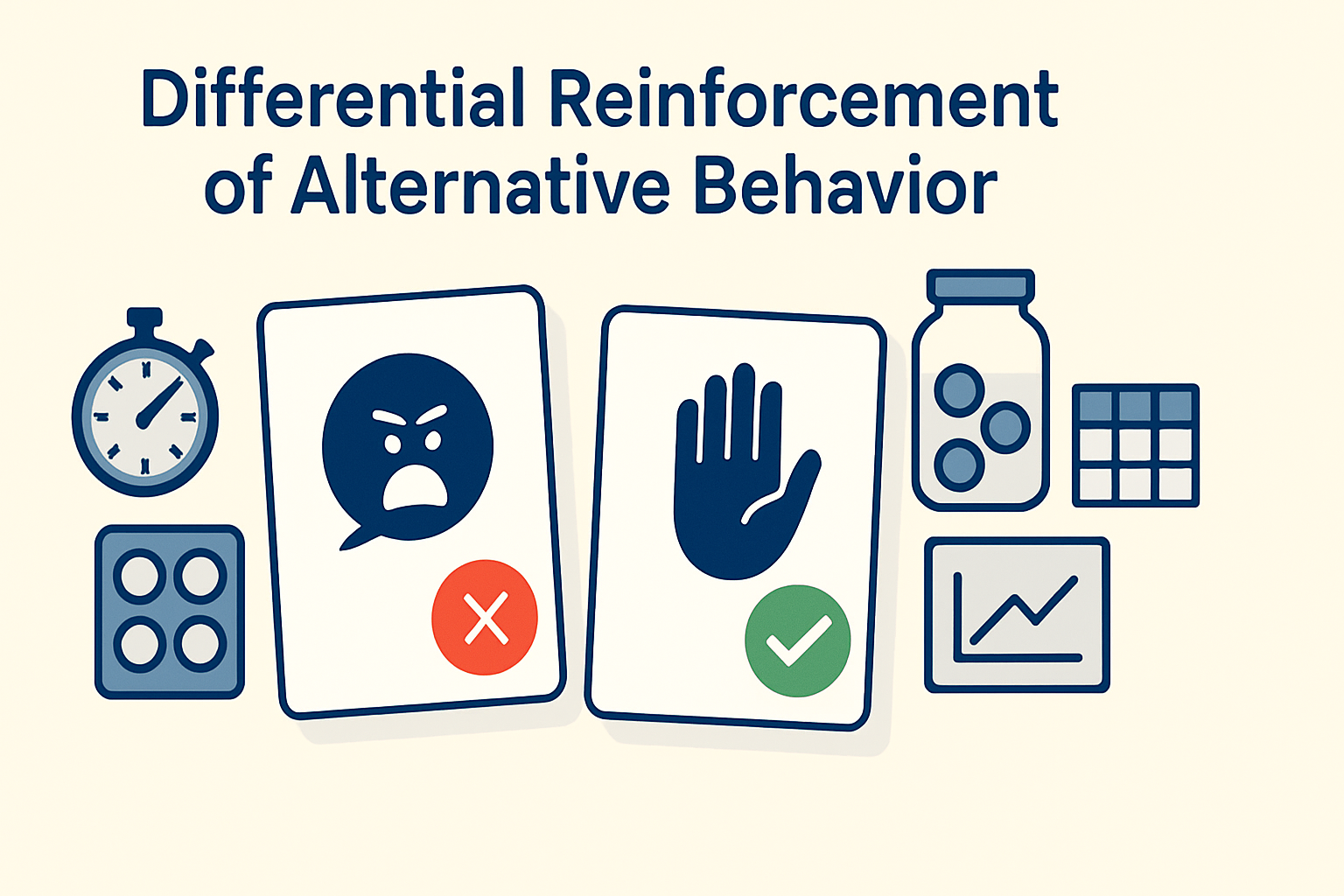
Differential Reinforcement of Alternative Behavior (DRA) is a fundamental behavior intervention procedure that involves reinforcing a specific, appropriate alternative behavior while systematically withholding reinforcement for a target problem behavior. This approach aligns with ethical practice by focusing on teaching new skills rather than simply suppressing unwanted behaviors.
Table of Contents
- Understanding Differential Reinforcement of Alternative Behavior
- Practical DRA Applications: Worked Examples
- DRA on the BCBA Exam: Key Considerations
- DRA Implementation Checklist for Study and Practice
- Summary and Next Steps for Mastery
The alternative behavior must be functionally equivalent to the problem behavior, meaning it serves the same purpose for the individual. This functional equivalence is crucial for long-term effectiveness and ethical implementation.
The Core Mechanism and Ethical Foundation
DRA operates on the principle of behavioral momentum – by strengthening an appropriate alternative response, we create a more adaptive behavioral repertoire. The procedure directly addresses the function of behavior identified through functional assessment.
According to the BACB Ethics Code, behavior analysts must select least restrictive interventions that prioritize client dignity and skill development. DRA exemplifies this ethical approach by focusing on skill acquisition rather than punishment-based methods.
Distinguishing DRA from Other Differential Reinforcement Procedures
Understanding the differences between DRA and other differential reinforcement procedures is essential for accurate implementation and exam success. Here’s a clear comparison:
- DRA (Differential Reinforcement of Alternative Behavior): Reinforces a specific alternative behavior that serves the same function as the problem behavior
- DRO (Differential Reinforcement of Other Behavior): Reinforces the absence of the target behavior during specific time intervals
- DRI (Differential Reinforcement of Incompatible Behavior): Reinforces a behavior that physically cannot occur simultaneously with the problem behavior
- DRL (Differential Reinforcement of Low Rates): Reinforces lower rates of a behavior rather than eliminating it completely
Practical DRA Applications: Worked Examples
Moving from theory to practice, these examples demonstrate how DRA functions in real-world scenarios. Each case includes hypothesized function and ABC analysis to illustrate the intervention logic.
Escape-Maintained Task Refusal Scenario
A student consistently shouts during math instruction. Functional assessment reveals the behavior is maintained by escape from difficult tasks. The ABC pattern shows: Antecedent – difficult worksheet presented, Behavior – shouting, Consequence – worksheet removed.
The DRA intervention teaches and reinforces hand-raising for a break as the alternative behavior. When the student raises their hand appropriately, they receive a brief break. Meanwhile, shouting no longer results in task removal, implementing extinction for the problem behavior.
Attention-Maintained Conversation Interruption
A child repeatedly taps their parent during phone calls. The function is attention-seeking, with the ABC pattern: Antecedent – parent on phone, Behavior – tapping, Consequence – parent says ‘Stop!’ (providing attention).
The DRA plan teaches the child to say ‘Excuse me’ and wait patiently. This appropriate communication is immediately reinforced with brief attention. Simultaneously, tapping receives planned ignoring to eliminate the reinforcement contingency.
Tangible-Maintained Aggression Example
An adult learner hits staff when preferred toys are unavailable. Functional analysis indicates tangible access as the maintaining variable: Antecedent – toy visible but out of reach, Behavior – hitting, Consequence – toy given.
The DRA intervention teaches handing a ‘want’ picture card as the alternative behavior. When the learner uses the communication card appropriately, they receive access to the preferred item. Hitting no longer produces tangible reinforcement, implementing extinction for aggression.
DRA on the BCBA Exam: Key Considerations
DRA appears frequently on the BCBA exam, particularly in scenarios testing ethical behavior reduction and function-based interventions. Understanding its proper application is crucial for exam success.
Task List Alignment and Exam Relevance
DRA aligns with several BACB Task List items, most notably B-9: Use differential reinforcement. It also relates to sections addressing ethical intervention selection and function-based treatment planning. For comprehensive exam preparation, consider reviewing our guide on differential reinforcement procedures.
Exam questions often present complex scenarios requiring candidates to identify when DRA is the most appropriate intervention based on functional assessment data. These questions test both conceptual understanding and practical application skills.
Common Exam Traps and How to Avoid Them
Several predictable traps appear in DRA-related exam questions. Being aware of these can improve your answer accuracy:
- Confusing DRA with DRO or DRI: Remember DRA reinforces a specific alternative behavior, not just absence or incompatible behavior
- Selecting non-functionally equivalent alternatives: The alternative must serve the same function as the problem behavior
- Incomplete extinction implementation: Reinforcement must be completely withheld for the problem behavior
- Insufficient initial reinforcement density: Alternative behaviors often need rich reinforcement schedules initially
- Overlooking generalization planning: DRA should include plans for maintaining and generalizing the alternative behavior
DRA Implementation Checklist for Study and Practice
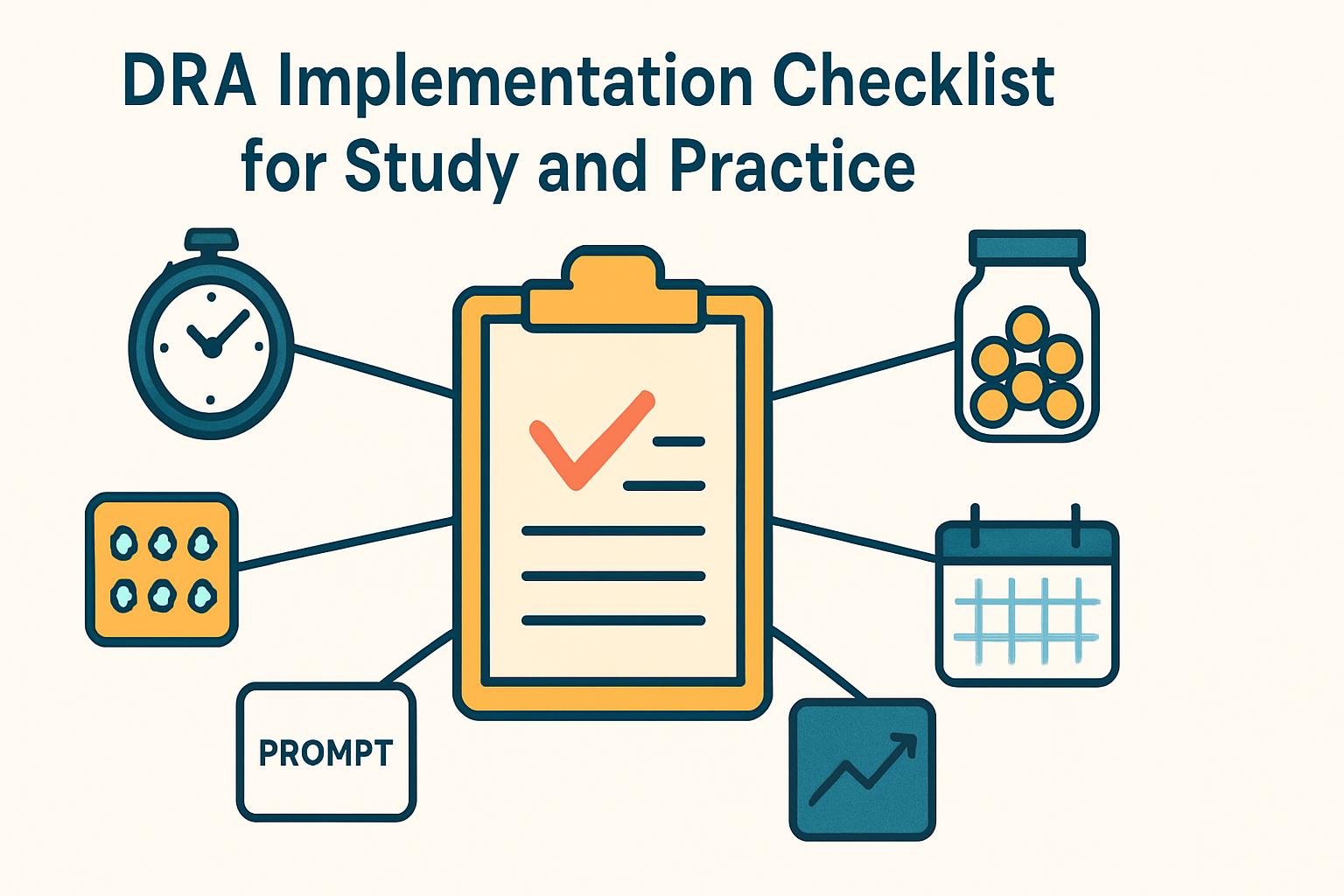
Use this checklist to ensure comprehensive DRA implementation and to prepare for exam questions. Each item represents a critical component of effective DRA programming.
- Conduct functional assessment to identify maintaining variables
- Select functionally equivalent alternative behavior
- Ensure alternative behavior is in the learner’s repertoire or can be taught
- Plan reinforcement schedule for alternative behavior (initially rich, then thinned)
- Implement extinction for problem behavior consistently
- Monitor both behaviors using appropriate data collection methods
- Plan for generalization across settings, people, and materials
- Include maintenance strategies to ensure long-term effectiveness
- Consider ethical implications and client preferences throughout
- Evaluate social validity of both the procedure and outcomes
Summary and Next Steps for Mastery
Differential Reinforcement of Alternative Behavior represents a powerful, ethical approach to behavior change that emphasizes skill development. Its effectiveness depends on careful functional assessment, selection of appropriate alternatives, and consistent implementation.
For BCBA candidates, mastering DRA requires both conceptual understanding and practical application skills. Consider creating your own DRA scenarios based on different behavioral functions, or practice identifying appropriate alternative behaviors in various case studies. Reviewing functional behavior assessment procedures can strengthen your foundation for effective DRA implementation.
Remember that successful DRA implementation extends beyond technical procedures to include ethical considerations, client collaboration, and ongoing evaluation. As you prepare for the BCBA exam, focus on understanding the underlying principles rather than just memorizing definitions. For additional study support, explore our resources on ethical practice in ABA to ensure your interventions align with professional standards.


