
What is Differential Reinforcement of Alternative Behavior (DRA)?
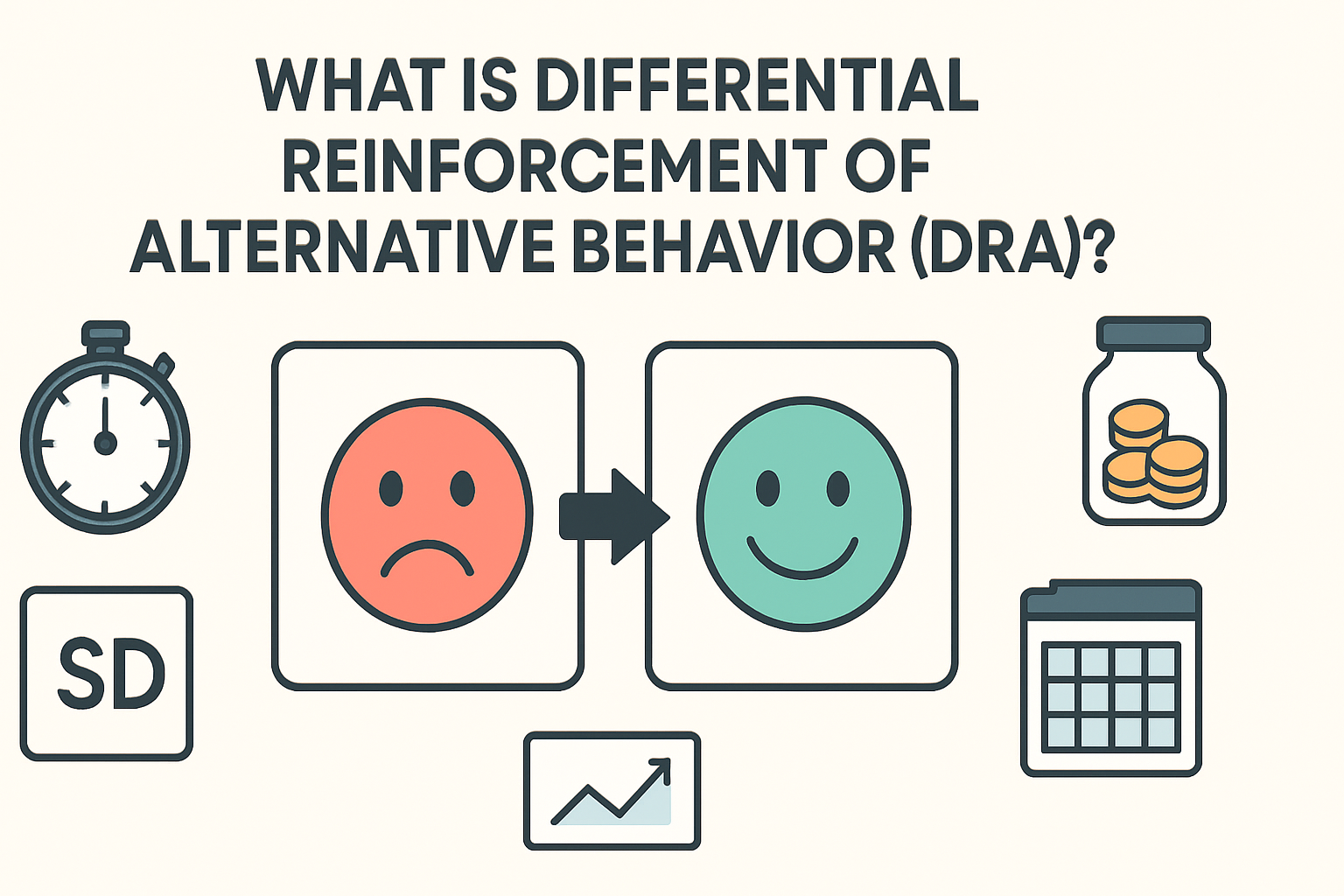
Differential Reinforcement of Alternative Behavior (DRA) is a reinforcement-based intervention that systematically increases a specific alternative behavior while decreasing a target problem behavior. The core mechanism involves providing reinforcement contingent only on the alternative response while withholding reinforcement for the problem behavior.
Table of Contents
- What is Differential Reinforcement of Alternative Behavior (DRA)?
- Applying DRA: Worked Examples for BCBA Candidates
- DRA on the BCBA Exam: Relevance and Common Traps
- DRA Implementation and Study Checklist
- References
The Core Definition and Mechanism
DRA targets two behaviors simultaneously: one to decrease (the problem behavior) and one to increase (the alternative). The differential aspect means reinforcement is delivered exclusively when the client engages in the predetermined alternative behavior. This creates a clear contingency where the alternative response becomes more efficient at accessing reinforcement than the problem behavior.
Why DRA is an Ethical Cornerstone
DRA aligns with the BACB Ethics Code by focusing on building new skills rather than suppressing behavior. This approach respects client autonomy and welfare by teaching functional alternatives. By emphasizing reinforcement over punishment, DRA represents a least restrictive intervention that promotes dignity and compassion in practice.
Applying DRA: Worked Examples for BCBA Candidates
These practical scenarios demonstrate how DRA translates from theory to clinical application. Each example includes ABC data, hypothesized function, and a step-by-step implementation plan.
Example 1: Reducing Elopement with a Communication Card
Scenario: A 7-year-old child elopes from the work table during difficult academic tasks. ABC data shows: Antecedent = difficult worksheet presented, Behavior = child runs from table, Consequence = teacher follows and removes worksheet.
Hypothesized function: Escape from demands. DRA plan: Teach child to hand over a ‘break’ card. Reinforcement: Immediate 2-minute break when card is handed. Extinction: Continue academic task if elopement occurs.
Example 2: Replacing Screaming with a Tap for Attention
Scenario: An adult client screams during group activities. ABC data shows: Antecedent = staff attending to other clients, Behavior = loud screaming, Consequence = staff provides attention and redirection.
Hypothesized function: Access to attention. DRA plan: Teach client to tap staff’s shoulder gently. Reinforcement: Immediate brief attention and praise for tapping. Extinction: Planned ignoring of screaming episodes.
Example 3: Addressing Hand Mouthing with a Chewy Necklace
Scenario: A teenager mouths hands during unstructured downtime. ABC data shows: Antecedent = no scheduled activities, Behavior = hand mouthing, Consequence = sensory stimulation continues.
Hypothesized function: Automatic reinforcement (sensory). DRA plan: Provide and teach use of chewy necklace. Reinforcement: Praise and continued access to necklace. This represents a functionally equivalent alternative that meets the same sensory need.
DRA on the BCBA Exam: Relevance and Common Traps
Understanding DRA distinctions is crucial for exam success. Questions often test your ability to differentiate DRA from similar procedures and identify appropriate implementation steps.
Key Distinctions: DRA vs. DRO, DRI, and DRL
Differential Reinforcement of Other Behavior (DRO) reinforces the absence of the target behavior during specific intervals. Differential Reinforcement of Incompatible Behavior (DRI) reinforces a behavior that physically cannot occur with the problem behavior. Differential Reinforcement of Low Rates (DRL) reinforces lower rates of the target behavior. DRA uniquely reinforces a specific alternative behavior regardless of physical compatibility.
Frequent Exam Pitfalls and How to Avoid Them
- Confusing alternative with any behavior: DRA requires a predetermined, specific alternative response
- Missing the differential component: Reinforcement must be contingent ONLY on the alternative behavior
- Selecting non-functionally equivalent alternatives: The alternative must serve the same function as the problem behavior
- Forgetting extinction component: Reinforcement must be withheld for the problem behavior
- Overlooking teaching phase: The alternative behavior must be taught to fluency before expecting consistent use
DRA Implementation and Study Checklist
This actionable guide supports both clinical practice and exam preparation. Use it as a quick reference for implementing DRA effectively.
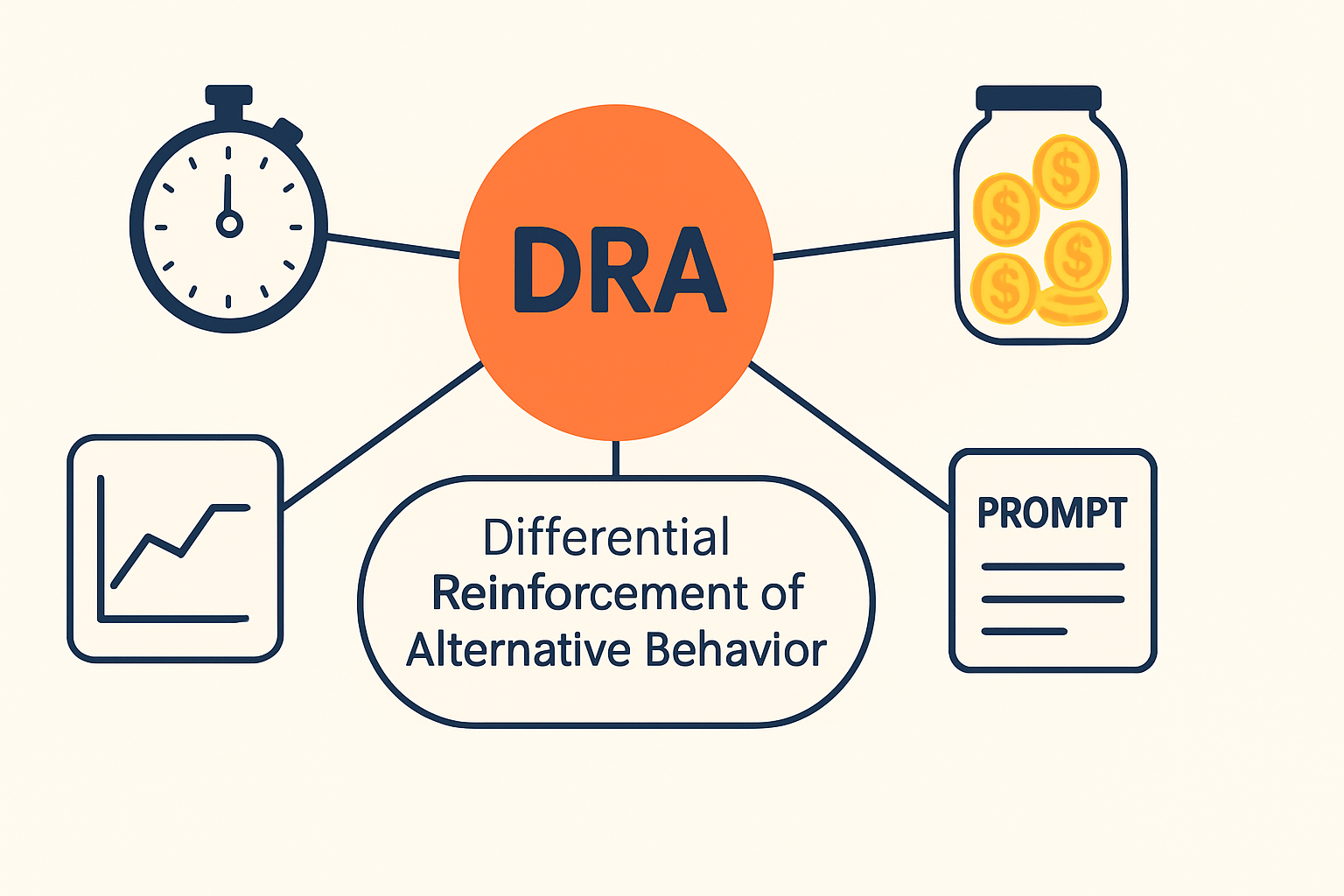
Your 5-Step DRA Implementation Guide
- Conduct a functional behavior assessment to identify the maintaining function
- Select a functionally equivalent alternative behavior that serves the same purpose
- Teach the alternative behavior to fluency using appropriate prompting and shaping procedures
- Reinforce the alternative behavior immediately and consistently using an effective reinforcer
- Withhold reinforcement for the problem behavior (implement extinction) while monitoring for extinction bursts
Study Questions for Self-Testing
A BCBA exam question might describe a scenario where a child hits peers to access toys, then ask which DRA alternative would be most appropriate. The correct answer would involve teaching a functional communication response like asking for a turn. Another question could present data showing reduction in screaming when tapping is reinforced, asking you to identify the procedure as DRA rather than DRO or DRI.
For comprehensive exam preparation, explore our guide on differential reinforcement procedures and other key concepts. Remember that effective DRA implementation requires careful consideration of reinforcer potency, response effort, and environmental arrangements to ensure the alternative behavior becomes the client’s preferred response option.



