
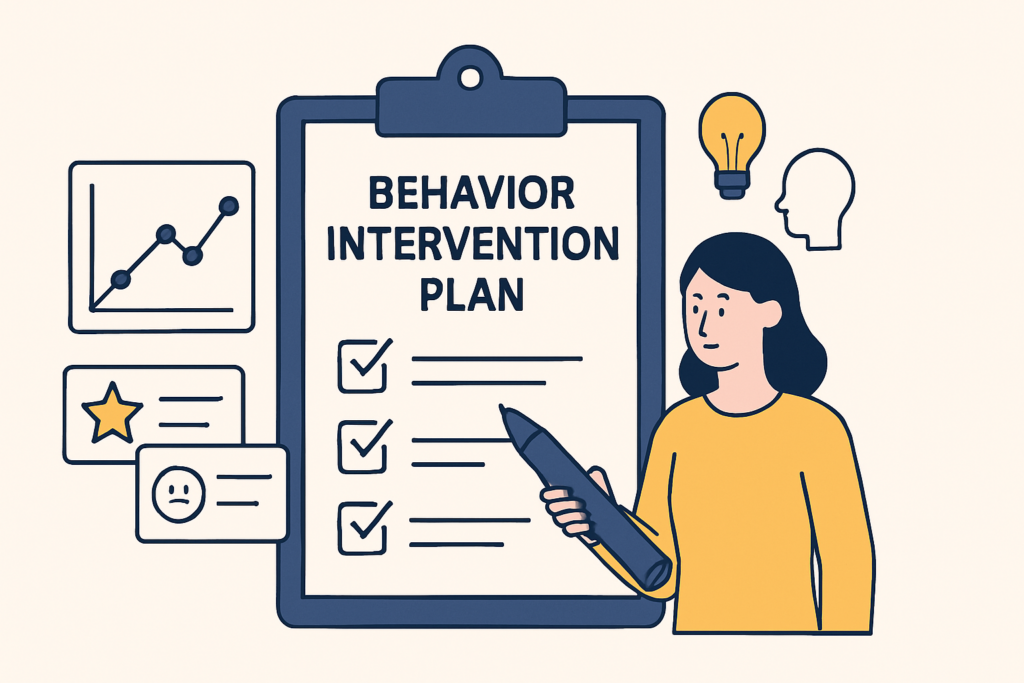
What is a Behavior Intervention Plan (BIP)? Definition and Purpose
A Behavior Intervention Plan is a structured document that outlines strategies to address challenging behaviors. This evidence-based approach serves as a roadmap for changing behavior patterns while teaching appropriate alternatives.
Table of Contents
- What is a Behavior Intervention Plan (BIP)? Definition and Purpose
- Core Components of an Effective BIP
- BIPs in Practice: Worked Examples for BCBA Candidates
- Navigating BIP Questions on the BCBA Exam
- Your BIP Development and Implementation Checklist
- References
The primary purpose of a BIP is to create meaningful behavior change through systematic intervention. It translates assessment findings into practical strategies that can be implemented consistently across settings.
The Direct Link: From Functional Assessment to Intervention
A BIP is never developed in isolation. It represents the logical outcome of a thorough Functional Behavior Assessment (FBA). Every intervention strategy must directly address the identified function of behavior.
This connection ensures that interventions are function-based rather than merely symptom-focused. When the FBA identifies escape from demands as the maintaining variable, the BIP must include strategies that address this escape function specifically.
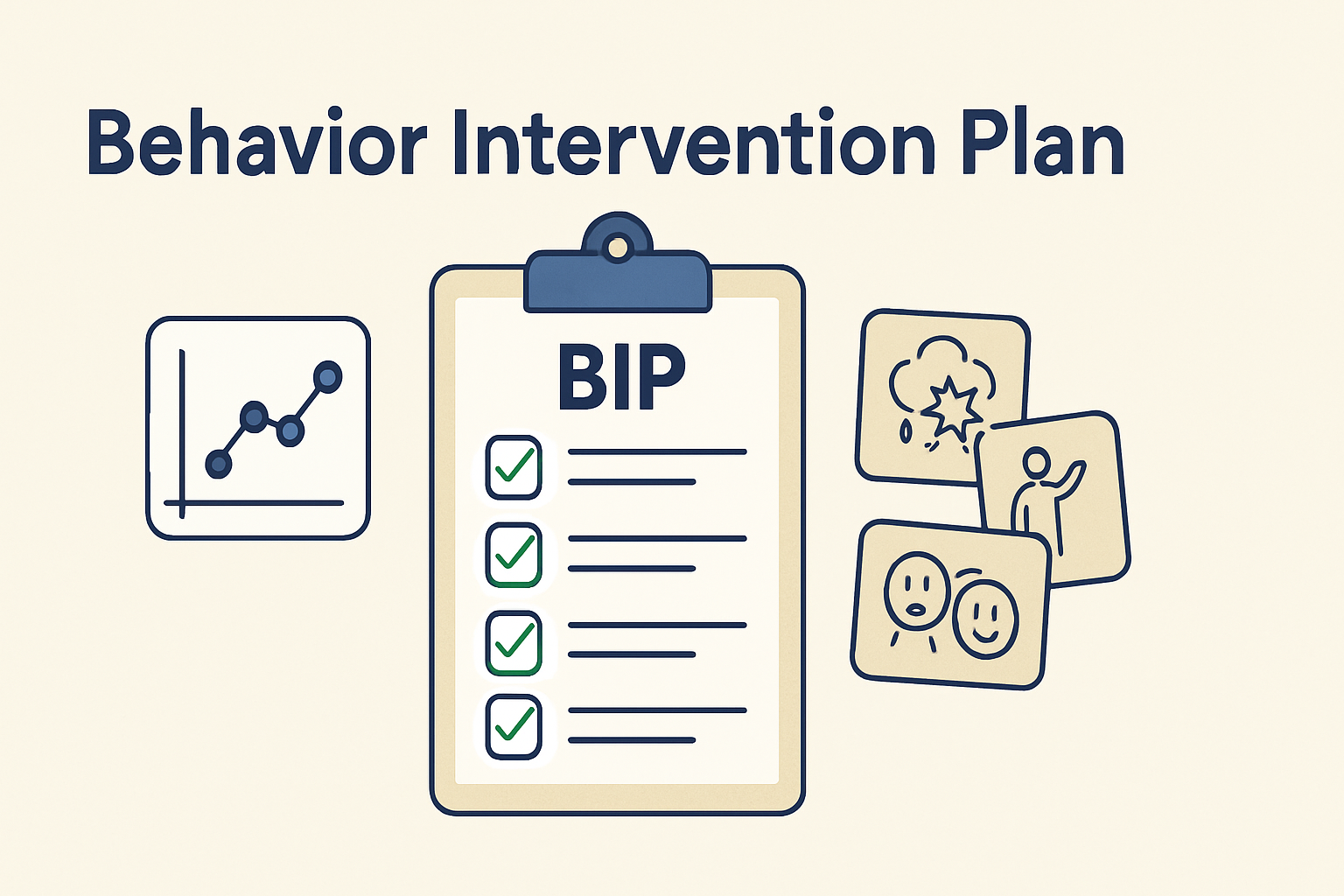
Core Components of an Effective BIP
Effective Behavior Intervention Plans contain several essential elements that work together systematically. Each component serves a specific purpose in the intervention process.
Operational Definitions and Baseline Data
Clear operational definitions are fundamental to any BIP. These definitions describe behaviors in observable, measurable terms that anyone can recognize and record consistently.
Baseline data provides the pre-intervention measurement against which progress is evaluated. This data should be collected across multiple sessions to establish a stable pattern before intervention begins.
Function-Based Intervention Strategies
This section forms the heart of the BIP, containing three types of strategies:
- Antecedent strategies that modify the environment to prevent behavior occurrence
- Teaching strategies that build appropriate replacement behaviors
- Consequence strategies that manage responses to both target and replacement behaviors
Each strategy must align with the identified behavioral function, whether it’s escape, attention, tangible access, or automatic reinforcement.
Implementation Plan and Fidelity Measures
The BIP must specify who will implement each component and how they will be trained. Treatment integrity measures ensure the plan is implemented as designed, which is crucial for determining effectiveness.
Regular fidelity checks help identify implementation drift and provide opportunities for retraining when needed. This component addresses the ethical responsibility for effective treatment delivery.
Data Collection and Progress Monitoring
Ongoing data collection methods must be clearly specified, including measurement procedures and review schedules. Progress monitoring determines whether the plan is working or needs revision.
Criteria for success should be established upfront, including specific behavioral benchmarks that indicate when goals have been met or when modifications are necessary.
BIPs in Practice: Worked Examples for BCBA Candidates
Understanding BIP components becomes clearer through practical application. These examples demonstrate how theory translates into practice.
Example 1: Escape-Maintained Elopement
Scenario: A student leaves their seat during independent math work. The FBA identifies escape from academic demands as the maintaining function.
BIP Components:
- Antecedent strategy: Provide a visual schedule showing work expectations
- Teaching strategy: Implement Functional Communication Training for requesting breaks
- Consequence strategy: Honor break requests when appropriately communicated
This approach directly addresses the escape function while teaching an appropriate alternative behavior.
Example 2: Attention-Maintained Disruption
Scenario: A client makes loud noises during group activities. Assessment reveals the behavior is maintained by peer and staff attention.
BIP Components:
- Antecedent strategy: Provide frequent non-contingent attention during activities
- Teaching strategy: Teach raising hand to gain attention appropriately
- Consequence strategy: Implement planned ignoring for disruptive behavior
This plan addresses the attention function while reducing reinforcement for the target behavior.

Navigating BIP Questions on the BCBA Exam
BCBA exam questions about BIPs test both conceptual understanding and practical application. Recognizing common patterns can improve your performance.
Common Exam Traps and How to Avoid Them
Several predictable errors appear frequently in BIP-related questions:
- Selecting punishment-based interventions before trying reinforcement-based approaches
- Choosing strategies not linked to the identified behavioral function
- Confusing operational definitions with vague labels or interpretations
- Neglecting stakeholder involvement and informed consent requirements
- Overlooking treatment integrity measurement and implementation fidelity
Always verify that interventions match the function and prioritize reinforcement over punishment.
Key Ethics Code Sections Related to BIPs
The BACB Ethics Code contains several sections directly relevant to BIP development and implementation:
- Code 2.09: Treatment/Intervention Efficacy requires using evidence-based procedures
- Code 2.10: Documenting Informed Consent ensures client participation
- Code 3.01: Being Truthful applies to data collection and reporting
- Code 4.07: Involving Clients emphasizes collaborative planning
Understanding these ethical requirements is essential for both practice and exam success. For more on ethical considerations, see our guide on ethics in ABA practice.
Your BIP Development and Implementation Checklist
Use this practical checklist to ensure comprehensive BIP development and implementation:
- Conduct a thorough Functional Behavior Assessment to identify maintaining variables
- Develop clear operational definitions for target and replacement behaviors
- Collect adequate baseline data across relevant conditions and settings
- Select function-based interventions addressing all three components (antecedent, teaching, consequence)
- Establish data collection procedures and progress monitoring schedules
- Plan for staff training and treatment integrity measurement
- Obtain necessary informed consent from all relevant stakeholders
- Schedule regular plan reviews and revision opportunities
- Document all procedures and outcomes according to ethical standards
This systematic approach ensures comprehensive planning and implementation. For additional resources on behavior assessment, explore our Functional Behavior Assessment guide.
Mastering Behavior Intervention Plans requires understanding both the theoretical framework and practical application. By focusing on function-based interventions, maintaining treatment integrity, and adhering to ethical standards, you can develop effective BIPs that create meaningful behavior change. Remember that successful implementation depends on clear communication, consistent application, and ongoing data analysis to guide decision-making.



