
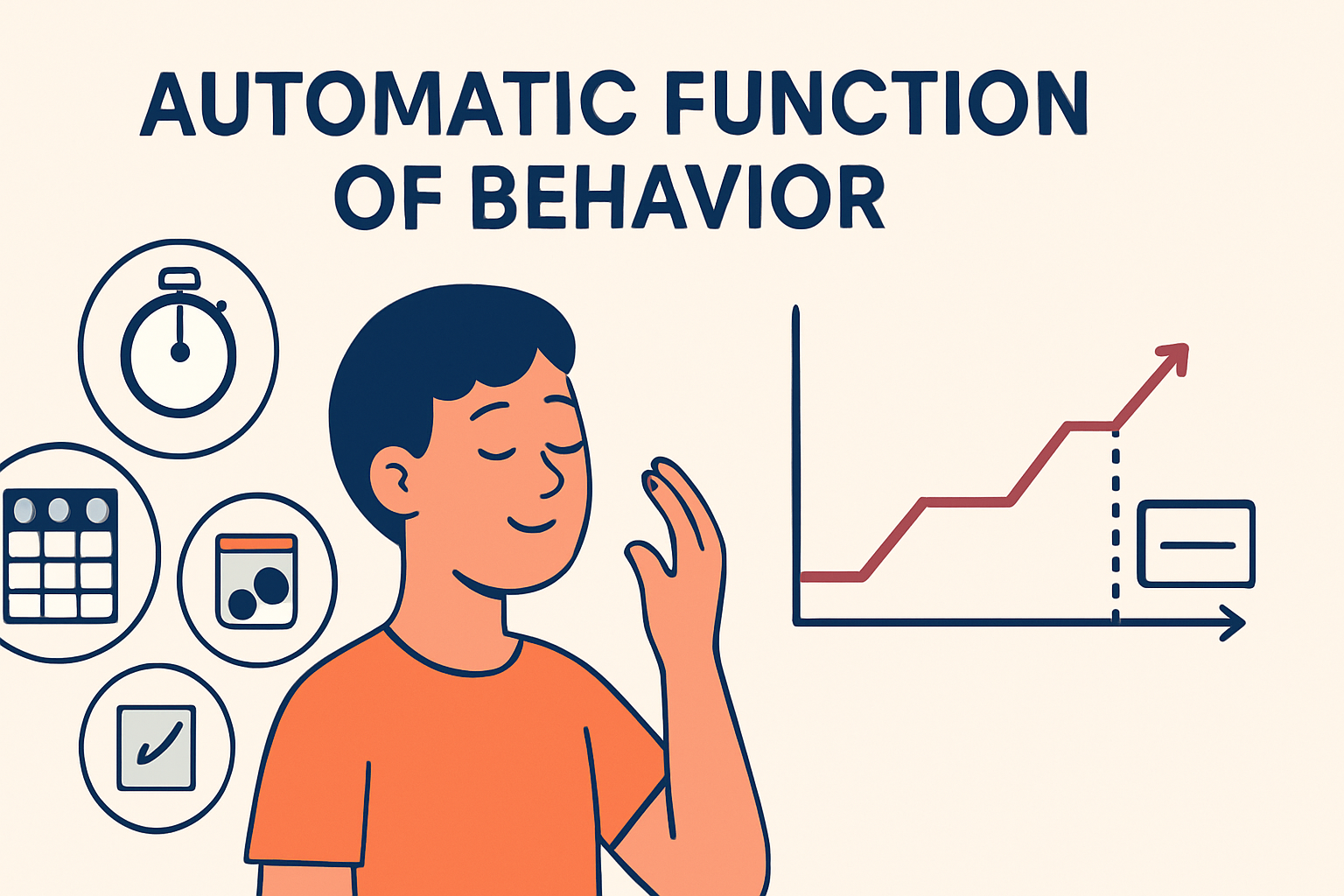
What is the Automatic Function of Behavior?
The automatic function of behavior refers to behaviors that produce their own reinforcement without requiring mediation by another person. This concept is fundamental to understanding why some behaviors persist even when they don’t appear to serve obvious social purposes.
Table of Contents
- What is the Automatic Function of Behavior?
- Identifying Automatic Functions: Worked ABC Examples
- Automatic Function and the BCBA Exam
- Quick Checklist for Identifying Automatic Reinforcement
- Summary and Key Takeaways
According to Cooper, Heron, and Heward (2020), automatic reinforcement occurs when the behavior itself generates the reinforcing consequence through sensory stimulation or internal feedback. The key distinction is that the consequence is directly produced by the behavior, not delivered by someone else.
Defining Automatic Reinforcement
Automatic reinforcement involves behaviors that are maintained by the sensory consequences they produce. These consequences can be either positive (adding stimulation) or negative (removing aversive stimulation). The critical feature is that the reinforcement occurs automatically as a direct result of the behavior.
Common examples include self-stimulatory behaviors like rocking, hand-flapping, or vocal stereotypy. These behaviors produce visual, auditory, tactile, or proprioceptive stimulation that maintains the behavior independently of social consequences.
Automatic vs. Socially-Mediated Functions: The Critical Difference
The primary distinction between automatic and socially-mediated functions lies in whether another person’s behavior is required for the consequence to occur. In automatic functions, the behavior-consequence relationship is direct and immediate.
For socially-mediated functions, another person must deliver the consequence. This includes attention, access to tangibles, or escape from demands. The BACB Task List emphasizes this distinction as essential for accurate functional assessment.
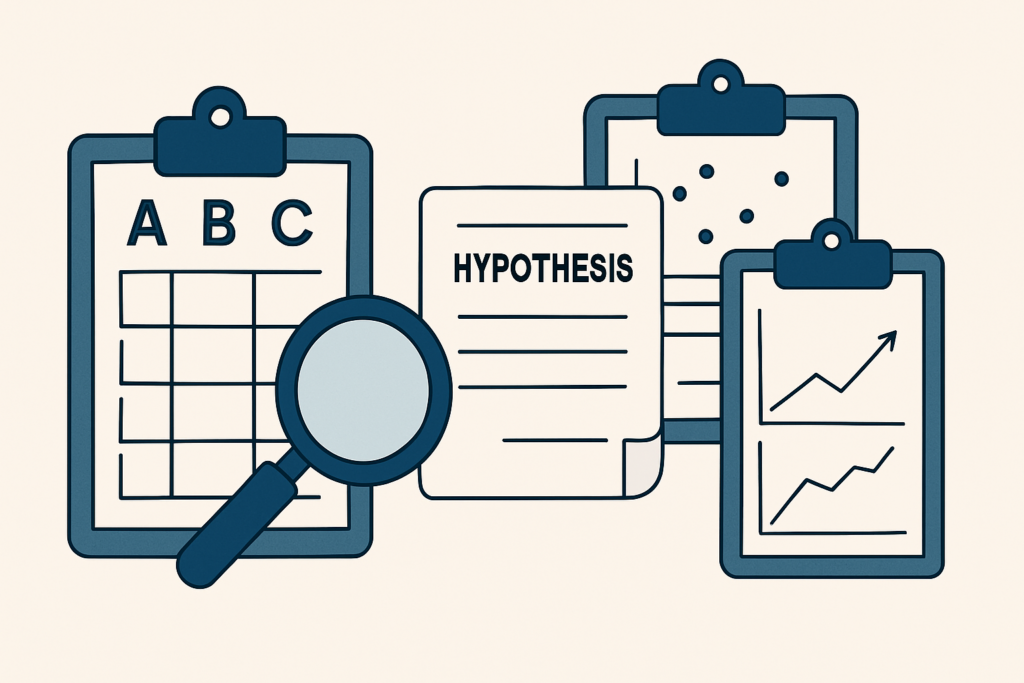
Identifying Automatic Functions: Worked ABC Examples
Moving from theory to practice, let’s examine concrete scenarios that illustrate how automatic functions manifest in real behavior. These examples demonstrate the ABC analysis approach to identifying automatic reinforcement.
Example 1: Stereotypy (Hand-Flapping)
Antecedent: Client is alone during unstructured time or appears bored. Behavior: Repetitive hand-flapping with visual tracking of hands. Consequence: Presumed proprioceptive stimulation and visual feedback from movement.
Hypothesized function: Automatic positive reinforcement. The behavior persists because it produces sensory stimulation, not because it gains attention or escapes demands. This pattern is common in self-stimulatory behavior often seen in autism spectrum disorders.
Example 2: Pica (Mouthing Non-Food Items)
Antecedent: Non-food items are present and accessible. Behavior: Putting items in mouth, chewing, or swallowing. Consequence: Oral sensory stimulation, taste, or texture feedback.
Hypothesized function: Automatic positive reinforcement. The behavior produces immediate sensory consequences. Assessment challenges include distinguishing from nutritional deficiencies while recognizing the health risks associated with ingesting non-food items.
Example 3: Skin Picking
Antecedent: Feeling a small irregularity, bump, or scab on skin. Behavior: Picking, scratching, or manipulating the skin area. Consequence: Tactile stimulation or temporary relief from the irregular sensation.
Hypothesized function: May involve automatic negative reinforcement if the behavior removes an aversive sensation. This demonstrates the complexity of automatic functions, where behaviors can serve to reduce discomfort through sensory feedback.

Automatic Function and the BCBA Exam
Understanding automatic functions is crucial for BCBA exam success. This knowledge area appears in multiple domains, particularly in functional assessment and intervention planning sections.
Common Exam Traps and How to Avoid Them
Several common mistakes can lead to incorrect answers on exam questions about automatic functions:
- Confusing automatic with attention when behavior occurs socially but the consequence is sensory. Look for whether social interaction actually reinforces the behavior.
- Overlooking automatic negative reinforcement in behaviors that reduce discomfort, like scratching an itch or adjusting clothing.
- Assuming ‘alone’ condition in functional analysis automatically means automatic function. Consider whether demands were present before the alone condition.
- Missing sensory consequences in behaviors that appear socially motivated but actually produce internal reinforcement.
Key Terms and Definitions for Your Flashcards
Master these essential terms for exam success:
- Automatic reinforcement: Behavior produces its own reinforcement without social mediation
- Stereotypy: Repetitive, invariant movements with no obvious social function
- Self-stimulatory behavior: Behaviors that produce sensory stimulation
- Sensory consequence: The internal stimulation that maintains automatic behaviors
- Alone condition: Functional analysis condition used to test for automatic reinforcement
- Automaticity: The property of being self-reinforcing without external mediation
Quick Checklist for Identifying Automatic Reinforcement
Use this practical tool when analyzing behavior scenarios:
- Check if the behavior produces its own sensory consequences
- Determine whether another person is required for the consequence
- Observe if the behavior occurs across different social contexts
- Analyze whether the behavior persists when alone
- Consider if sensory stimulation is the primary maintaining variable
- Review functional analysis data from alone conditions
Summary and Key Takeaways
The automatic function of behavior represents a critical concept in applied behavior analysis. Understanding these principles is essential for both ethical practice and exam success.
Key points to remember include the distinction between automatic and socially-mediated functions, the importance of sensory consequences, and the practical application of these concepts in assessment and intervention. For more on functional assessment approaches, see our guide on functional analysis vs descriptive assessment.
Mastering automatic functions requires recognizing that some behaviors are maintained by their internal consequences rather than social ones. This understanding informs effective intervention strategies that address the true maintaining variables of behavior. For additional study resources, explore our comprehensive four functions of behavior guide and reference the official BACB Task List for complete coverage of required competencies.



