
What Are Automatic Contingencies?
In applied behavior analysis, automatic contingencies represent behavior-consequence relationships that occur without mediation by another person. This fundamental concept distinguishes behaviors maintained by their direct sensory or physiological effects from those requiring social interaction.
Table of Contents
- What Are Automatic Contingencies?
- Examples of Automatic Contingencies in Practice
- Automatic Contingencies on the BCBA Exam
- Quick Checklist for Identifying Automatic Contingencies
- Summary and Key Takeaways
The behavior produces its own reinforcing or punishing consequences immediately and directly. These contingencies often involve private events like sensory stimulation, pain reduction, or internal states that others cannot directly observe.
The Core Definition and Key Characteristics
An automatic contingency exists when a behavior’s consequence is produced by the behavior itself, without requiring another person’s action. The three-term contingency (antecedent-behavior-consequence) remains intact, but the consequence occurs naturally from the behavior.
Key characteristics include:
- No social mediation required – the consequence happens automatically
- Often involves sensory consequences or internal states
- Can function as either reinforcement or punishment
- Consequences are typically immediate following the behavior
- Commonly maintains self-stimulatory behaviors in clinical populations
Automatic vs. Socially-Mediated: A Critical Distinction
This distinction is crucial for both clinical assessment and BCBA exam success. Socially-mediated contingencies require another person’s action to deliver the consequence. For example, when a child’s tantrum leads to attention from a parent, the consequence is socially mediated.
Automatic contingencies, in contrast, involve consequences that occur naturally. The behavior itself produces the outcome. This difference affects functional assessment and intervention planning significantly.
Consider these comparison points:
- Automatic reinforcement: Behavior produces its own sensory stimulation
- Social reinforcement: Another person provides attention or access
- Automatic punishment: Behavior causes immediate discomfort
- Social punishment: Another person applies a consequence
Examples of Automatic Contingencies in Practice
Concrete examples help solidify understanding of how automatic contingencies operate in real-world scenarios. These examples cover different functions and demonstrate practical application.
Example 1: Automatic Positive Reinforcement
A child engages in rocking back and forth while sitting. The behavior produces vestibular stimulation and proprioceptive feedback. This sensory input serves as an added stimulus that increases the future likelihood of rocking.
ABC analysis:
- Antecedent: Sitting quietly, low sensory input
- Behavior: Rocking back and forth
- Consequence: Added vestibular/proprioceptive stimulation
- Function: Automatic positive reinforcement
This example illustrates how behaviors can be maintained by their sensory consequences without social interaction. For more on reinforcement concepts, see our guide on reinforcement in ABA.
Example 2: Automatic Negative Reinforcement
A person scratches an itchy mosquito bite. The scratching behavior removes the aversive itch sensation. This removal of discomfort increases the likelihood of scratching when future itches occur.
ABC analysis:
- Antecedent: Itchy sensation from mosquito bite
- Behavior: Scratching the bite
- Consequence: Removal of itch (aversive stimulus)
- Function: Automatic negative reinforcement
This demonstrates escape from private aversive stimuli, a concept often tested on the BCBA exam. Understanding negative reinforcement is essential, as covered in our negative reinforcement guide.
Example 3: Automatic Punishment
Someone touches a hot stove and experiences immediate pain. The painful consequence decreases the future likelihood of touching hot stoves. This occurs without anyone else’s intervention.
ABC analysis:
- Antecedent: Hot stove present
- Behavior: Touching the stove
- Consequence: Immediate pain sensation
- Function: Automatic positive punishment
While less commonly targeted in ABA interventions, automatic punishment is a valid concept in behavior analysis. It represents naturally occurring consequences that suppress behavior.
Automatic Contingencies on the BCBA Exam
Understanding automatic contingencies is essential for BCBA exam success. These concepts appear frequently in questions about functional assessment and behavior function identification.
Common Exam Traps and How to Avoid Them
Several common mistakes can lead to incorrect answers on exam questions about automatic contingencies. Being aware of these traps improves your accuracy.
- Confusing automatic with involuntary: Automatic contingencies involve operant behavior, not reflexes
- Assuming all self-stimulation is automatic: Some self-stimulatory behaviors may be socially maintained
- Overlooking automatic negative reinforcement: Escape from private aversives is easily missed
- Misidentifying the mediator: Failing to determine if another person is required for the consequence
- Ignoring sensory consequences: Not considering non-social reinforcement sources
Sample Question Walkthrough
Consider this exam-style scenario: ‘A child repeatedly taps their fingers on the desk during independent work. When observed, the behavior occurs regardless of teacher attention. Data show the behavior increases during boring tasks.’
Analysis steps:
- Identify the behavior: Finger tapping on desk
- Determine the consequence: Sensory stimulation from tapping
- Check for social mediation: No teacher response required
- Analyze the pattern: Increases during low-stimulation activities
- Conclude: Automatic positive reinforcement via sensory input
This systematic approach helps identify automatic contingencies accurately. For more exam strategies, explore our BCBA exam prep guide.
Quick Checklist for Identifying Automatic Contingencies
Use this practical checklist when analyzing behavior functions in clinical practice or exam preparation:
- Ask: Does the behavior produce its own consequence? Look for direct sensory or physiological effects
- Check for social mediation: Determine if another person’s action is required
- Consider private events: Include sensory, pain, or internal state changes
- Analyze timing: Automatic consequences are typically immediate
- Review environmental conditions: Note when behavior occurs without social context
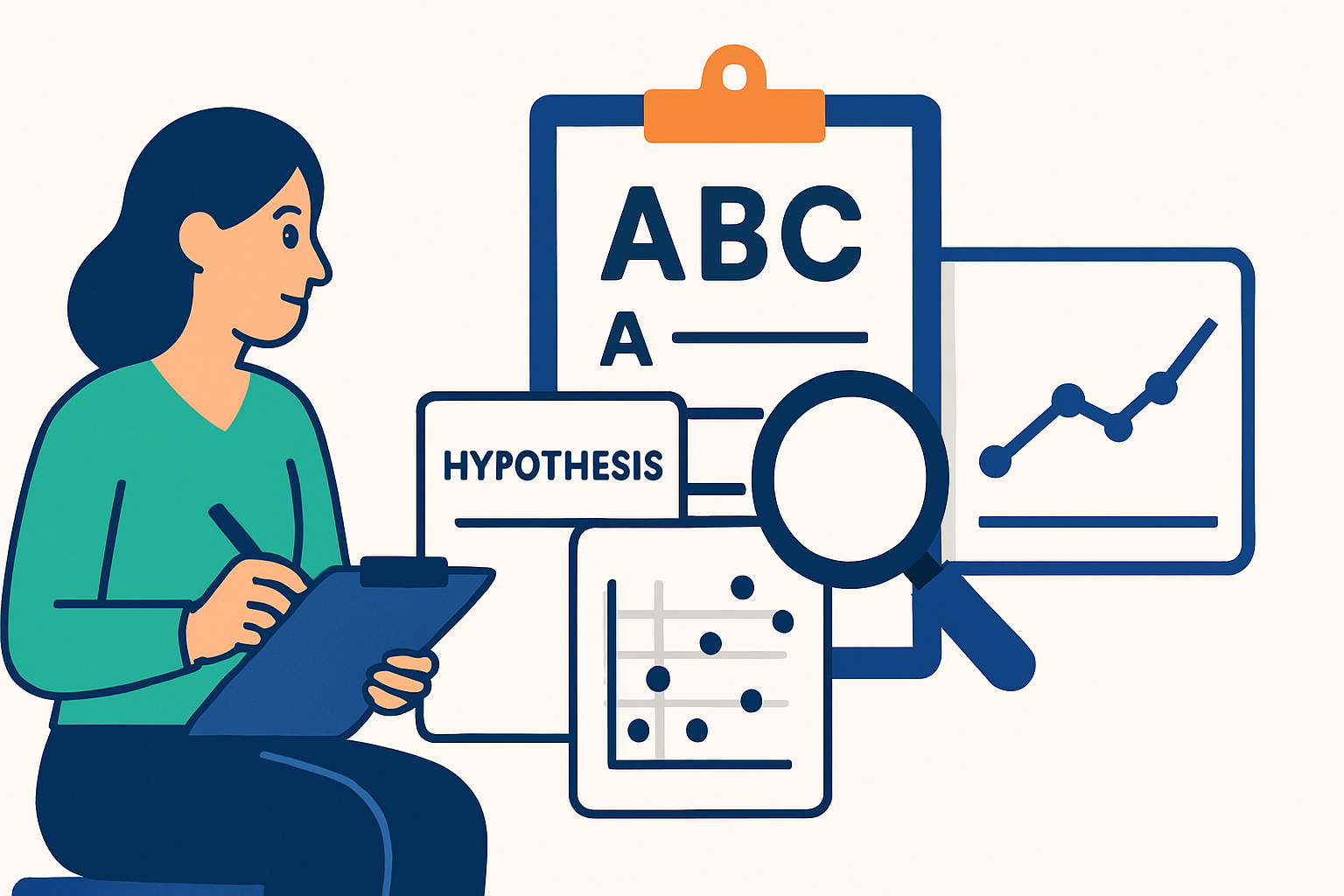
- Test hypotheses: Use functional analysis to confirm automatic functions
Summary and Key Takeaways
Automatic contingencies represent a fundamental concept in behavior analysis with significant implications for both clinical practice and BCBA exam preparation. Mastering this topic requires understanding several key points.
First, recognize that automatic contingencies involve behavior-consequence relationships that occur without social mediation. The behavior itself produces the reinforcing or punishing outcome. This distinguishes them from socially-mediated contingencies, which require another person’s action.
Second, automatic contingencies can function as either reinforcement or punishment. Automatic positive reinforcement adds sensory stimulation, while automatic negative reinforcement removes aversive private events. Automatic punishment involves naturally occurring aversive consequences.
Third, accurate identification requires careful analysis of whether consequences are socially mediated. Common exam traps include confusing automatic with involuntary behavior and overlooking automatic negative reinforcement functions.
Finally, apply systematic analysis using the checklist provided. Consider consulting the BACB Task List for additional guidance on behavior-analytic concepts and their application in certification contexts.
Understanding automatic contingencies enhances both clinical assessment skills and exam performance, making it an essential component of behavior-analytic competency.



