
Mastering the 6th Edition Task List flashcards represents more than simple memorization—it’s about building the applied analytical skills required for BCBA certification success. This guide provides concrete strategies to transform your flashcard practice from passive review to active mastery.
Table of Contents
- 6th Edition Task List flashcards: Why Flashcards Work for the 6th Edition Task List
- Crafting High-Impact Flashcards: Beyond the Definition
- Common Exam Traps and How Your Flashcards Can Avoid Them
- Your Strategic Study Checklist
- Summary: From Memorization to Mastery
6th Edition Task List flashcards: Why Flashcards Work for the 6th Edition Task List
Effective flashcard use targets the specific cognitive demands of the BCBA exam. The assessment requires more than recognition—it demands applied understanding and rapid retrieval of complex concepts across diverse scenarios.
Building Fluency, Not Just Recognition
Passive reading creates surface-level familiarity, but flashcards force active recall. This cognitive process strengthens neural pathways, making retrieval faster and more reliable during high-pressure testing situations. The difference between recognizing a term and being able to apply it in context determines exam success.
Mapping Terms to the Task List Domains
Organize your flashcards according to the major Task List domains: Measurement, Experimental Design, Behavior-Change Procedures, and Ethical Considerations. This structure mirrors the exam’s organization and helps build conceptual frameworks rather than isolated facts. Consider color-coding cards by domain to create visual associations that enhance memory.
Crafting High-Impact Flashcards: Beyond the Definition
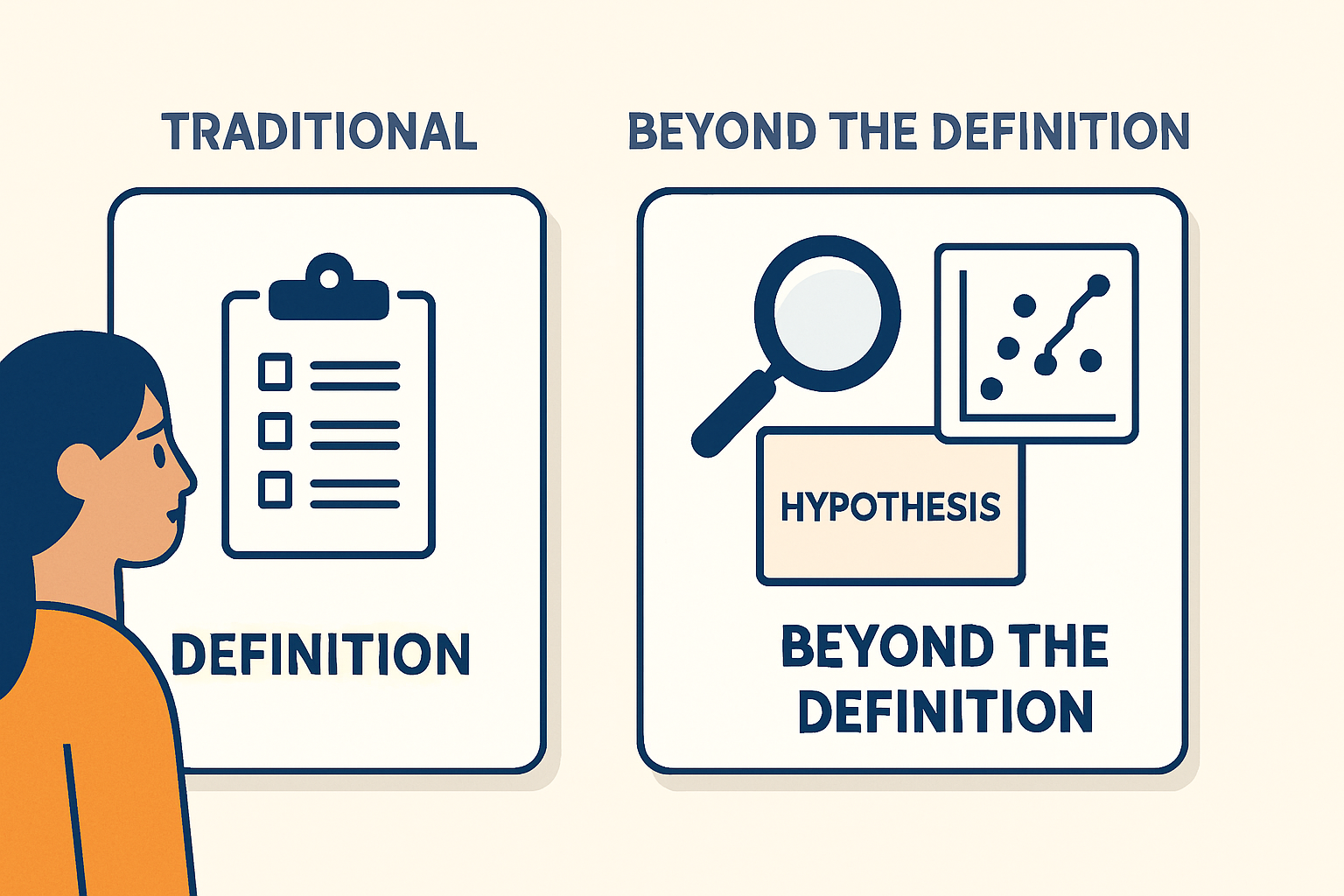
Traditional flashcards often stop at definitions, but exam questions require application. Your cards should bridge the gap between knowing what a term means and understanding how it functions in real-world scenarios.
The Three-Sided Flashcard Model
This powerful approach transforms simple definition cards into application tools:
- Side 1: Term only (e.g., ‘Motivating Operation’)
- Side 2: Formal definition with key characteristics
- Side 3: Real-world example AND non-example with explanation
The third side is crucial—it builds the discrimination skills needed to distinguish between similar concepts on the exam.
Worked Example: From Term to Functional Analysis
Consider the term Automatic Reinforcement. A basic card might define it as reinforcement not mediated by others. An effective three-sided card would include:
- Definition: Reinforcement where the behavior itself produces the reinforcing consequence
- Example: A child engages in hand flapping when alone; the proprioceptive stimulation maintains the behavior
- Non-example: A child cries and receives attention from a parent (this is socially-mediated)
This approach helps you recognize automatic reinforcement in functional analysis scenarios, a common exam application. For deeper understanding of reinforcement concepts, see our guide on automatic reinforcement.
Linking Related Terms and Concepts
Create ‘concept cluster’ cards that prompt connections between related terms. For example:
- ‘Name 4 types of intermittent reinforcement schedules‘
- ‘Distinguish between topography-based vs. function-based definitions‘
- ‘List 3 examples of unconditioned motivating operations‘
These cards build the associative networks needed for complex exam questions that test multiple concepts simultaneously.
Common Exam Traps and How Your Flashcards Can Avoid Them
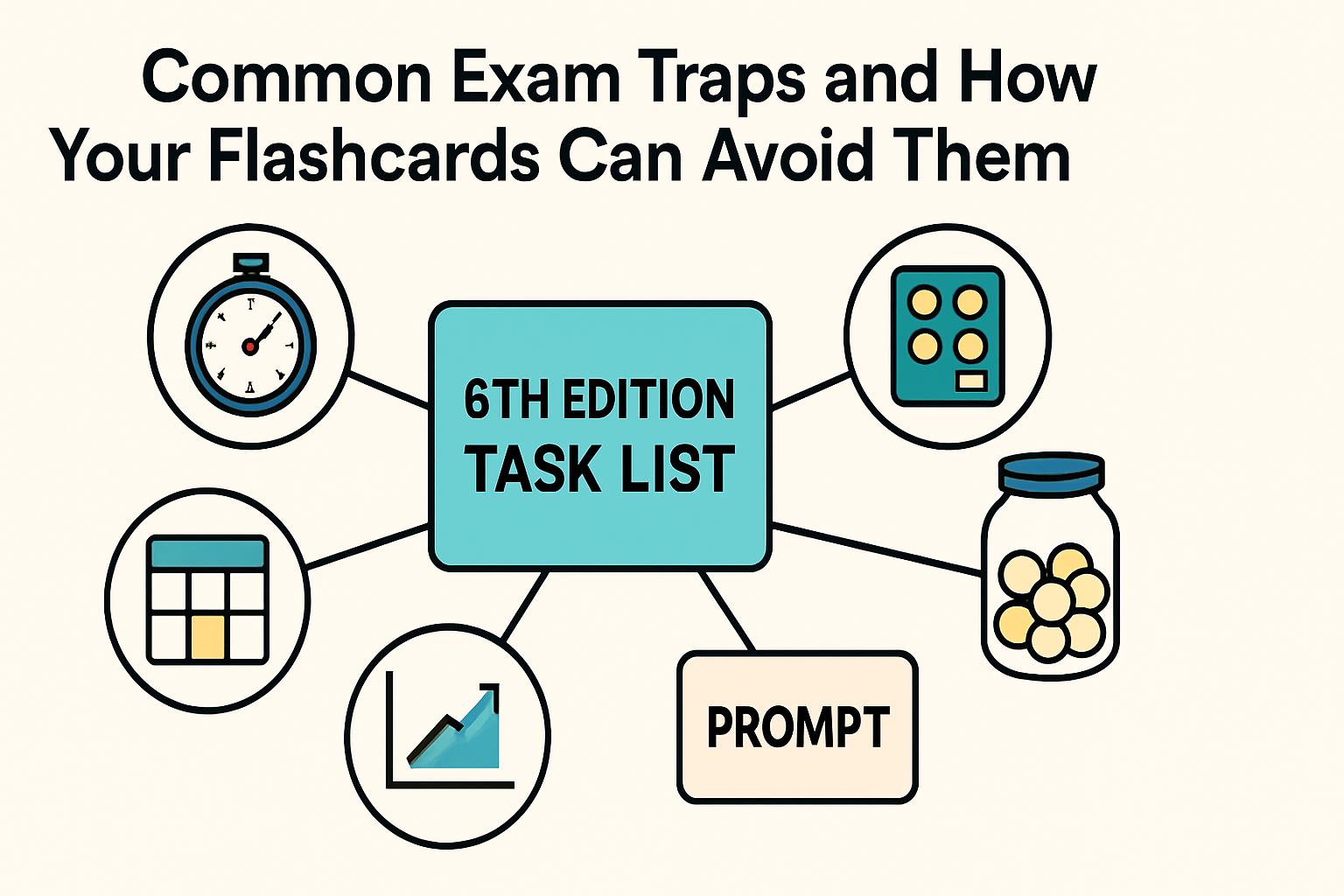
The BCBA exam consistently tests specific areas of confusion. Your flashcards can be designed to preempt these common mistakes by building clear distinctions from the start.
Terminology Triplets: Reinforcement, Punishment, Extinction
These concepts represent one of the most frequent exam traps. Candidates often confuse the procedural aspects (adding/removing stimuli) with the functional outcomes (behavior increase/decrease). Create comparison cards that clearly distinguish:
- Positive Reinforcement: ADD stimulus, INCREASE behavior
- Negative Reinforcement: REMOVE stimulus, INCREASE behavior
- Positive Punishment: ADD stimulus, DECREASE behavior
- Negative Punishment: REMOVE stimulus, DECREASE behavior
Include quick decision rules on your cards: ‘First ask: Did behavior increase or decrease? Then ask: Was something added or removed?’ For more on these distinctions, explore our positive vs negative punishment guide.
Measurement and Data Pitfalls
Measurement concepts frequently trip up candidates. Create flashcards that include:
- Clear distinctions between count vs. rate (rate includes time component)
- When to use duration vs. latency measurement
- Decision rules for continuous vs. discontinuous measurement
- Conditions requiring partial interval vs. whole interval recording
Each card should include a ‘when to use’ statement that provides practical application guidance. For comprehensive measurement strategies, reference the BACB Task List official documentation.
Your Strategic Study Checklist
Implement these actionable steps to transform your flashcard practice immediately:
- Organize by domain: Sort cards according to Task List sections
- Implement three-sided model: Add application examples to every card
- Create comparison cards: Build cards that contrast commonly confused terms
- Schedule active review: Use spaced repetition—review cards daily with increasing intervals
- Test application: Regularly practice applying terms to novel scenarios
- Build concept clusters: Create cards that link 3-5 related terms
- Include decision rules: Add quick-reference guidelines for measurement and intervention choices
For additional study strategies, consider our comprehensive exam study framework.
Summary: From Memorization to Mastery
Strategic flashcard use transforms your approach to the 6th Edition Task List. By moving beyond simple definitions to applied understanding, you build the analytical skills the BCBA exam demands. The three-sided model, concept clusters, and trap-avoidance strategies create a robust study system that develops both knowledge and application ability.
Remember that fluency develops through consistent, active engagement with the material. Your flashcards should challenge you to not just recall definitions but to apply concepts across diverse scenarios. This approach mirrors the exam’s demands and prepares you for the complex decision-making required in both testing and professional practice.
For authoritative guidance on Task List content and exam structure, always refer to the official BACB Handbook alongside your flashcard practice.
Ready to test what you just learned?
Put it into practice with a free, full-length BCBA mock exam — real exam-style questions, instant scoring, and answer explanations.



