

Understanding procedural integrity and dosage is essential for effective ABA practice and BCBA exam success. These two concepts, while related, serve distinct purposes in measuring intervention quality and quantity. Mastery of both ensures ethical, evidence-based practice that produces meaningful client outcomes.
Table of Contents
- procedural integrity and dosage: Defining the Core Concepts: Integrity vs. Dosage
- Applied Examples: From Concept to Practice
- Exam Relevance and Common Traps
- Quick-Reference Checklist for Study and Practice
- Summary: Ensuring Effective and Ethical Outcomes
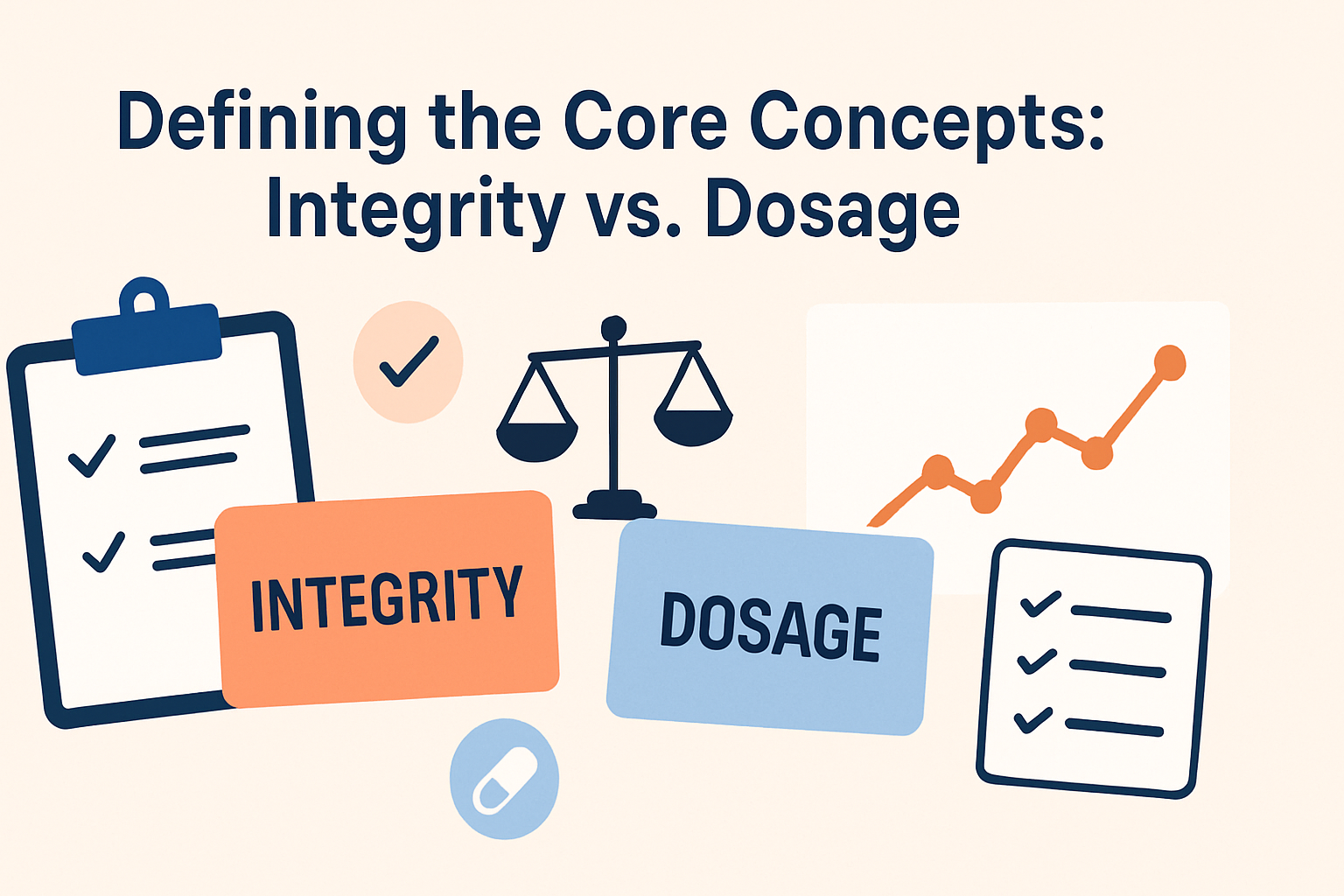
procedural integrity and dosage: Defining the Core Concepts: Integrity vs. Dosage
Before applying these concepts, you need clear definitions rooted in the 6th Edition Task List. Both terms appear throughout the BACB standards but measure different aspects of intervention implementation.
What is Procedural Integrity (Treatment Fidelity)?
Procedural integrity refers to the degree to which an intervention is implemented as designed. This treatment fidelity measure ensures that what you planned is what actually happens during sessions. According to Task List items like B-9 and C-1, you must systematically measure implementation accuracy.
Common measurement methods include:
- Implementation checklists with specific procedural steps
- Interobserver agreement (IOA) calculations between observers
- Video review with scoring protocols
- Direct observation with momentary time sampling
What is Dosage in ABA?
Dosage represents the quantitative amount of therapeutic intervention delivered. This includes measurable units like hours per week, number of teaching trials, or session duration. Unlike integrity, dosage focuses on exposure quantity rather than implementation quality.
Key dosage metrics include:
- Weekly therapy hours (e.g., 20 hours/week)
- Number of discrete trial training opportunities per session
- Frequency of natural environment teaching episodes
- Duration of social skills training sessions
The Critical Distinction: How They Work Together
High dosage with low integrity wastes resources and may reinforce incorrect behaviors. Conversely, perfect integrity with insufficient dosage limits progress potential. Think of it like medication: correct administration (integrity) plus adequate amount (dosage) equals effective treatment.
This synergy is crucial for evidence-based practice. The BACB emphasizes both concepts in their ethics guidelines for responsible service delivery.
Applied Examples: From Concept to Practice
Let’s examine how these concepts work in real ABA scenarios. These examples demonstrate measurement approaches and data interpretation.
Example 1: DRA Procedure for Attention-Maintained Behavior
A BCBA implements differential reinforcement of alternative behavior (DRA) for a child who engages in disruptive behavior maintained by attention. The intervention plan includes specific steps for reinforcement delivery and extinction.
Procedural integrity measurement:
- Checklist with 8 critical steps (e.g., “provide attention within 3 seconds of appropriate request”)
- Weekly IOA checks between therapist and supervisor
- Target: 90% implementation accuracy
Dosage measurement:
- 15 teaching opportunities per 30-minute session
- 3 sessions daily, 5 days weekly
- Total: 225 opportunities weekly
When progress stalls, you must determine whether the issue is implementation quality (integrity) or insufficient practice (dosage).
Example 2: Self-Management Protocol for a Teenager
A teenager with executive functioning challenges learns to use a self-monitoring checklist for homework completion. The intervention includes specific prompting procedures and reinforcement schedules.
Procedural integrity factors:
- Was the checklist introduced with correct behavior skills training?
- Were prompts faded systematically as independence increased?
- Was reinforcement delivered according to the planned schedule?
Dosage considerations:
- Frequency of self-monitoring checks (e.g., 4 times during homework)
- Number of days the system was implemented weekly
- Duration of parent training sessions on protocol implementation
This example shows how both concepts apply even when the client implements part of the intervention. For more on measurement approaches, see our guide on data collection methods.
Exam Relevance and Common Traps
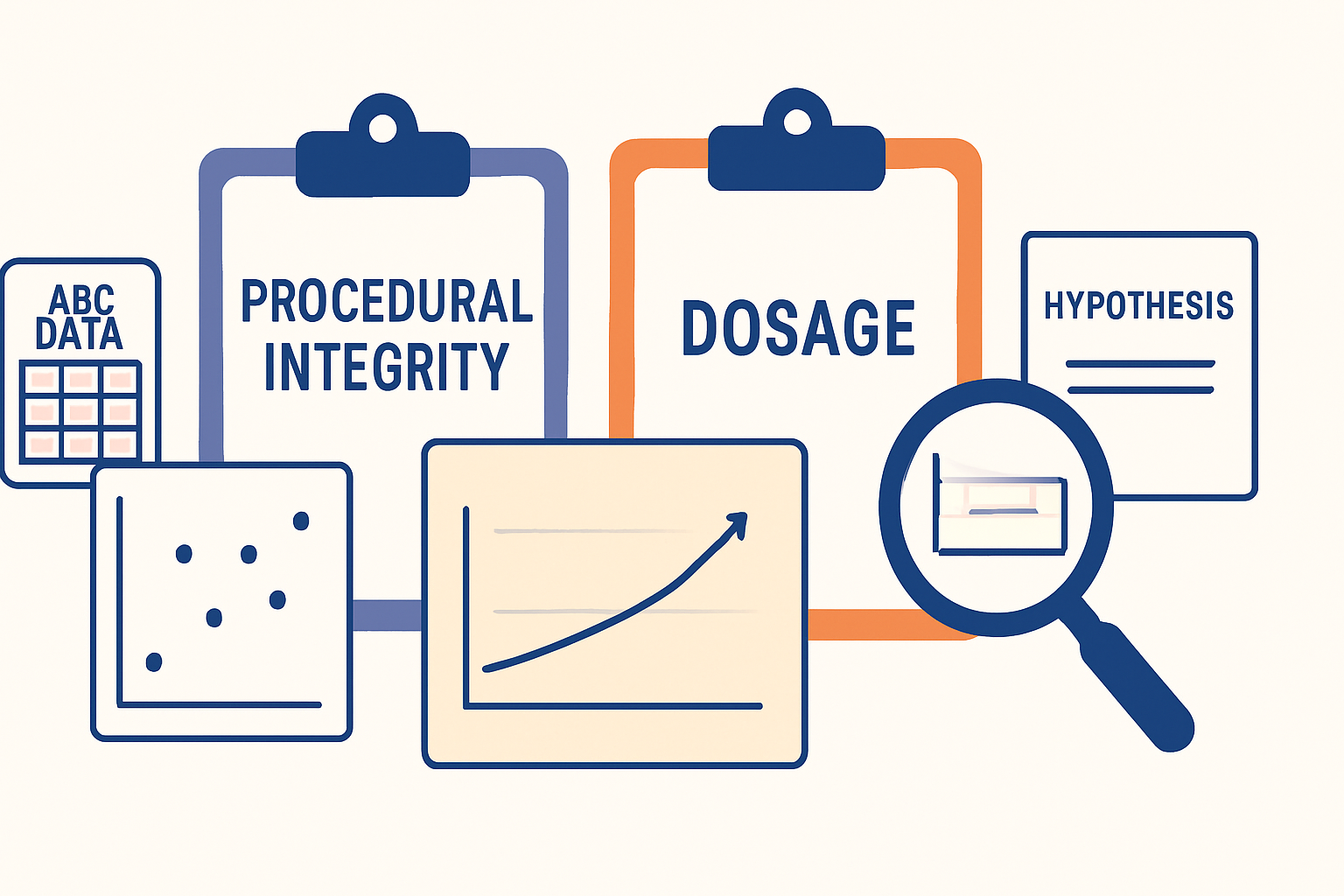
The BCBA exam tests your ability to distinguish between these concepts and apply them appropriately. Understanding common misinterpretations can prevent costly exam errors.
How the BCBA Exam Tests These Concepts
Questions typically appear in Assessment (Domain B), Intervention (Domain C), and Implementation & Management (Domain D) sections. The 6th Edition Task List explicitly addresses both concepts across multiple items.
Look for these question patterns:
- “To ensure the effectiveness of the intervention…” (usually procedural integrity)
- “To provide sufficient learning opportunities…” (typically dosage)
- “When progress is slower than expected…” (requires analyzing both factors)
- “For appropriate generalization…” (often involves dosage considerations)
Frequent Misinterpretations and Exam Traps
Candidates often confuse related but distinct concepts. Watch for these common traps:
- Confusing integrity with IOA: IOA measures agreement between observers, not implementation accuracy
- Mistaking session duration for treatment fidelity: Longer sessions don’t guarantee correct implementation
- Selecting ‘increase dosage’ when data shows integrity problems: More of a poorly implemented intervention won’t help
- Overlooking dosage when integrity is high: Perfect implementation of insufficient intervention still fails
- Assuming social validity indicates adequate integrity: Stakeholder satisfaction doesn’t guarantee procedural accuracy
For additional exam strategy guidance, review our study framework.
Quick-Reference Checklist for Study and Practice
Use this actionable checklist to assess both concepts in your practice and exam preparation:
- Define measurement systems for procedural integrity before implementation
- Establish baseline dosage requirements based on research and client needs
- Monitor both metrics regularly, not just client progress data
- Analyze integrity data when progress plateaus before increasing dosage
- Document adjustments to either parameter with rationale
- Train staff on both implementation accuracy and session structure
- Review BACB resources on ethical implementation standards
- Consult research on optimal dosage for specific interventions and populations
Summary: Ensuring Effective and Ethical Outcomes
Mastering procedural integrity and dosage transforms your ABA practice from guesswork to precision. These complementary concepts ensure interventions are both correctly implemented and sufficiently delivered. On the BCBA exam, this distinction separates passing from exceptional performance.
Remember that ethical practice requires monitoring both dimensions. The BACB’s emphasis on evidence-based implementation makes these concepts non-negotiable for competent practitioners. For comprehensive exam preparation, explore our 6th edition study guide covering all essential domains.
As you prepare for the exam, practice distinguishing between questions about implementation quality versus intervention quantity. This skill will serve you well both on test day and throughout your career as a behavior analyst committed to meaningful, measurable client progress.


