

If you’re preparing for the BCBA certification exam, you’ve likely heard about pilot questions but may be unsure about their exact role. These embedded items serve a specific purpose in maintaining exam quality, but understanding how they work can significantly impact your test-taking approach. This guide provides clear answers about the number of pilot questions on the 6th Edition exam and practical strategies for handling them effectively.
Table of Contents
- BCBA exam pilot questions: The Straight Answer: How Many Unscored Pilot Questions Are on t
- Understanding the Purpose of Pilot Questions
- Exam Strategy: How to Approach Pilot Questions
- Connecting to the 6th Edition Task List
- Quick-Reference Checklist for Exam Day
BCBA exam pilot questions: The Straight Answer: How Many Unscored Pilot Questions Are on t
The Behavior Analyst Certification Board includes exactly 10 unscored pilot questions on each BCBA 6th Edition exam. These are embedded within the total 160 questions you’ll encounter during your testing session.
Official Count and Exam Structure
Your BCBA exam consists of 160 total questions, with 150 being scored items that determine whether you pass or fail. The remaining 10 questions are unscored pilot items used for statistical analysis and future exam development. This structure means you’ll need to answer all 160 questions, but only 150 count toward your final score.
Why This Number Matters for Your Timing
Since pilot questions consume the same amount of time as scored questions, effective time management becomes crucial. With 4 hours to complete 160 questions, you have approximately 1.5 minutes per question. The presence of pilot questions means you cannot afford to spend excessive time on any single item, regardless of whether you suspect it might be unscored.
Understanding the Purpose of Pilot Questions
Pilot questions serve essential functions in maintaining the validity and reliability of the BCBA certification process. Understanding their purpose can reduce test anxiety and help you approach the exam with greater confidence.
How the BACB Uses Pilot Items for Future Exams
The BACB uses pilot questions to collect statistical data on item performance. This data helps determine item difficulty, discrimination indices, and whether questions effectively measure the intended content areas. Successful pilot items may eventually become scored questions on future exams, while poorly performing items are revised or discarded.
Pilot Questions vs. Experimental Items: Is There a Difference?
In the context of the BCBA exam, pilot questions and experimental items refer to the same concept. The BACB uses these terms interchangeably in their published materials. These items are indistinguishable from scored questions in terms of format, content coverage, and presentation during the exam.
Exam Strategy: How to Approach Pilot Questions
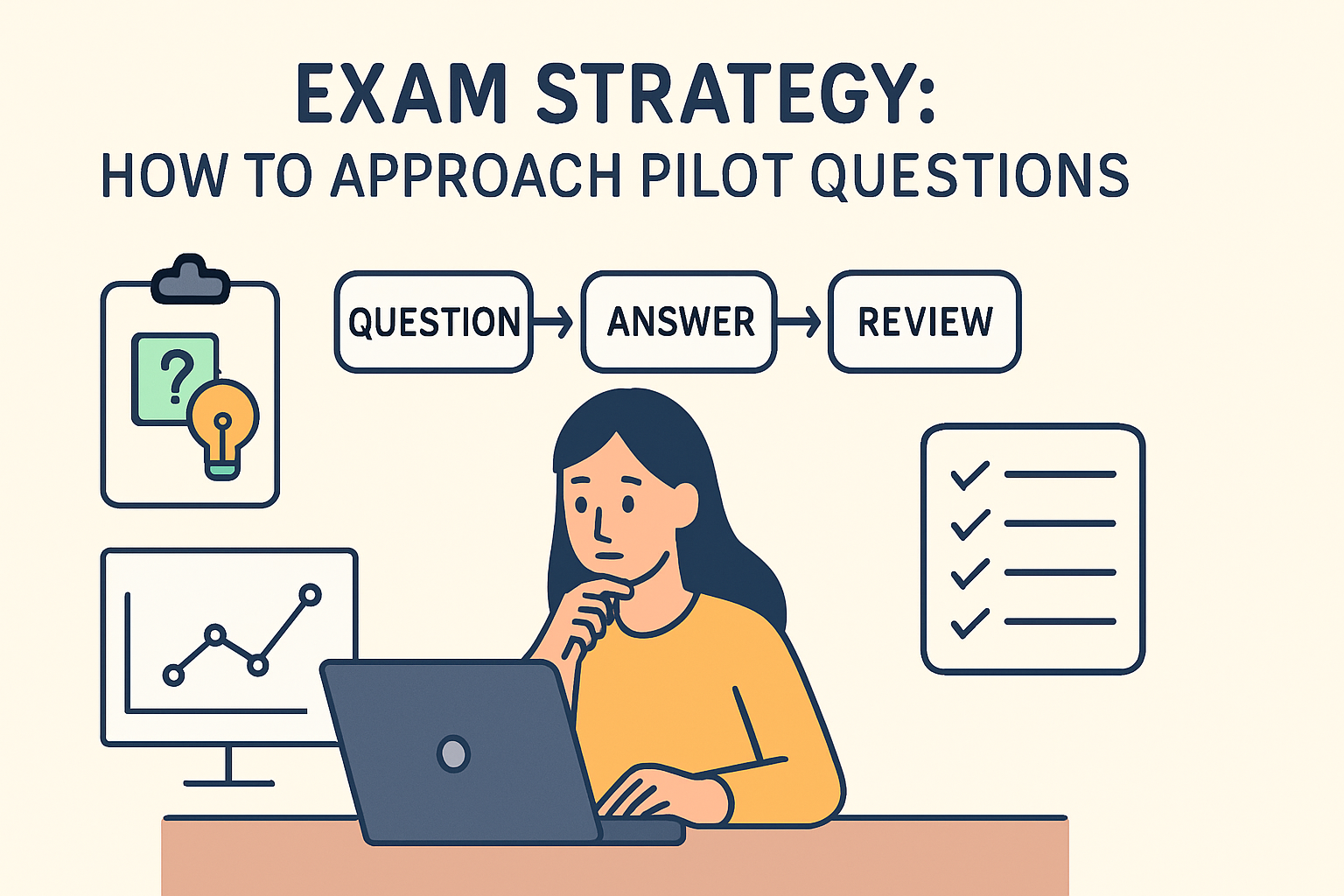
Developing an effective strategy for handling pilot questions can significantly impact your exam performance. The key is to approach every question with the same level of attention and care.
The Biggest Mistake: Trying to Identify Which Questions Are Pilot
Many candidates waste valuable mental energy trying to guess which questions might be pilot items. This approach is counterproductive because:
- Pilot questions are intentionally designed to be indistinguishable from scored items
- Guessing consumes time that could be spent on actual problem-solving
- You might incorrectly identify difficult questions as pilot items and rush through them
- The uncertainty can increase anxiety and reduce overall performance
Applying Standard Test-Taking Tactics
Apply your standard test-taking strategies to every question, regardless of whether you suspect it might be a pilot item. This includes using process of elimination, carefully reading all answer choices, and referring back to the question stem when needed. For comprehensive exam preparation strategies, check our BCBA exam prep guide.
Managing Your Mindset and Time
Maintain a consistent time management approach throughout the exam. If you encounter a particularly challenging question, don’t assume it’s a pilot item and rush through it. Instead, use your standard approach: make your best educated guess, mark it for review if needed, and move forward. Remember that perceived difficulty doesn’t indicate whether a question is scored or unscored.
Connecting to the 6th Edition Task List
Understanding how pilot questions relate to the 6th Edition Task List can provide valuable insights into their potential content and distribution across exam domains.
Where Pilot Questions Likely Appear in Content Areas
Based on the BACB exam blueprint, pilot questions are distributed across all content domains proportionally. However, certain areas might see more pilot items due to their complexity or the need for better measurement tools. These areas include:
- Experimental design and single-subject methodology
- Complex behavior change procedures
- Advanced measurement systems and data interpretation
- Ethical decision-making in complex scenarios
For detailed information about the exam structure, see our 6th Edition exam blueprint guide.
Practice Example: Analyzing a Sample ‘Pilot-Level’ Scenario
Consider this complex scenario typical of potential pilot questions: “A behavior analyst is implementing a differential reinforcement procedure with a client who engages in multiple topographies of aggression. The intervention shows initial success but then plateaus. What should the analyst consider first when analyzing the data?”
This type of question tests multiple competencies simultaneously, including data analysis, intervention planning, and clinical decision-making. Such multi-layered questions are ideal candidates for pilot testing because they assess higher-order thinking skills.
Quick-Reference Checklist for Exam Day
Use this practical checklist to ensure you’re prepared for handling pilot questions effectively during your exam:
- Remember there are exactly 10 pilot questions among 160 total items
- Apply your standard test-taking strategies to every question
- Maintain consistent time management (approximately 1.5 minutes per question)
- Avoid wasting mental energy trying to identify pilot items
- Treat all questions as if they count toward your final score
- Use the mark for review feature for challenging questions
- Trust your preparation and don’t second-guess based on perceived difficulty
- Refer to the official BACB Handbook for current exam policies
By understanding the role of pilot questions and approaching them strategically, you can focus your energy on demonstrating your knowledge and skills effectively. Remember that successful exam performance comes from thorough preparation and confident application of behavior analytic principles, not from trying to outsmart the exam structure.



