
Facing a retake of the BCBA exam requires more than just studying harder. It demands a systematic overhaul of your approach using the very principles you’ve studied. This BCBA exam retake strategy 6th edition guide applies ABA methodology to transform your preparation from generic review to targeted intervention.
Table of Contents
- BCBA exam retake strategy 6th edition: Conducting a Functional Assessment of Your First Ex
- Building Your 6th Edition Retake Intervention Plan
- Programming for Success: Antecedent Manipulations and MOs
- Exam Day Performance: The Final Generalization Probe
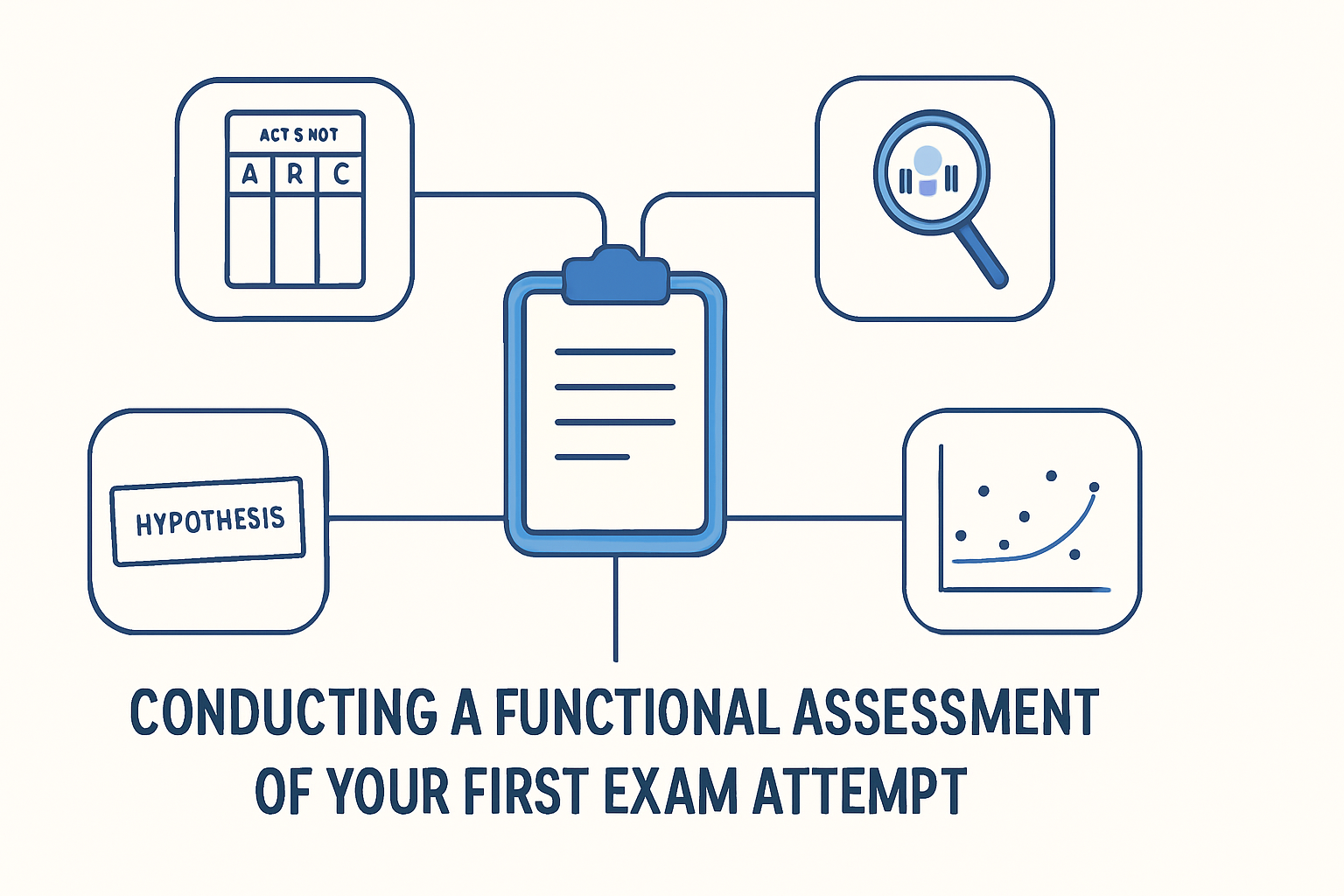
BCBA exam retake strategy 6th edition: Conducting a Functional Assessment of Your First Ex
Treat your previous exam performance as target behavior requiring analysis. This approach moves beyond simple score review to identify functional relationships between your preparation and outcomes.
Antecedent Analysis: What Set the Occasion for Difficult Items?
Examine the conditions that preceded challenging questions. Your study environment, schedule, and materials served as discriminative stimuli for either effective or ineffective responding.
- Environmental factors: Did your study space contain distractions that functioned as competing stimuli?
- Temporal patterns: Were you studying during times of day when you’re typically less alert?
- Material selection: Did you rely on outdated resources not aligned with the 6th Edition Task List?
- Physical/emotional state: Did fatigue, hunger, or anxiety function as setting events that altered the effectiveness of your study sessions?
Behavioral & Consequence Analysis: Your Test-Taking Repertoire
Analyze your actual exam behaviors and their consequences. This reveals patterns that may have punished accurate responding.
- Pacing behaviors: Did rushing through questions provide immediate time relief but punish accuracy through careless errors?
- Question-reading patterns: Did you consistently miss key details in vignette-based questions?
- Elimination strategies: Were your elimination methods systematic or based on gut feelings?
- Answer-changing habits: Did second-guessing typically lead to changing correct answers to incorrect ones?
Building Your 6th Edition Retake Intervention Plan
Translate your functional assessment into a structured, measurable intervention plan. This moves beyond generic study schedules to targeted skill development.
Skill Acquisition: Targeted Domain Remediation
Use your score report to create discrete learning objectives rather than just identifying weak areas. For example, a weakness in Measurement becomes specific objectives like:
- Define and exemplify celeration across different data patterns
- Graph and interpret equal-interval vs. ratio charts
- Calculate and apply interobserver agreement formulas correctly
- Distinguish between continuous and discontinuous measurement procedures
Each objective should be measurable and tied directly to Task List items. Consider using our 6th Edition exam blueprint guide to prioritize high-weight domains.
Fluency Building and Generalization
Move from knowing concepts to quickly applying them under exam conditions. This requires programming for response fluency and stimulus generalization.
- Timed mock exams: Practice under conditions that mimic the actual exam’s time pressure
- Flashcard drills: Build automaticity with definitions and key terms
- Scenario rotation: Practice applying concepts across novel vignettes to promote generalization
- Error analysis: Review incorrect answers to identify patterns in application errors
Programming for Success: Antecedent Manipulations and MOs
Address the logistical, environmental, and motivational components often overlooked in retake preparation. This systems-level view ensures all variables support your success.
Arranging the Environment for Effective Studying
Apply concepts like setting events and motivating operations to structure your preparation environment strategically.
- Deprivation operations: Limit access to social media to increase the effectiveness of study breaks as reinforcers
- Abolishing operations: Remove distractions from your study space to reduce the value of off-task behaviors
- Discriminative stimuli: Designate specific locations and materials for focused study sessions
- Stimulus control: Use consistent cues to signal when intensive studying should occur
Self-Management Strategies for the Retake Candidate
Become your own behavior analyst by implementing systematic self-management procedures.
- Self-monitoring: Track study hours, accuracy rates, and content coverage with simple data sheets
- Goal-setting: Establish specific, measurable weekly objectives tied to your assessment findings
- Contingent reinforcement: Schedule preferred activities after completing targeted study sessions
- Progress review: Conduct weekly analyses of your data to adjust strategies as needed
Exam Day Performance: The Final Generalization Probe
Prepare for the specific contingencies of test day to ensure your skills generalize from study to exam performance.
Common Exam Traps and Behavioral Pitfalls
Identify and plan for specific traps that often catch retake candidates. Frame these as competing behaviors to manage through antecedent strategies.
- Textbook definition bias: Selecting the perfect definition instead of the BEST application for the given scenario
- Over-analysis paralysis: Spending excessive time on single questions due to anxiety about previous failure
- Pattern recognition errors: Assuming questions follow predictable patterns from your first attempt
- Time management collapse: Allowing difficult questions to consume disproportionate time
Develop specific response strategies for each trap. For example, when facing vignette-based questions, practice the systematic approach outlined in our test question strategies guide.
Quick Implementation Checklist
- Complete a functional assessment of your first attempt using ABC analysis
- Transform score report weaknesses into discrete learning objectives
- Schedule regular timed mock exams to build response fluency
- Arrange your study environment to support focused attention
- Implement self-monitoring and reinforcement systems
- Practice specific strategies for common exam traps
- Review the 6th Edition Task List changes to ensure complete coverage
Final Summary: From Analysis to Action
Your retake strategy should mirror effective ABA practice: assess, intervene, measure, and adjust. By applying functional assessment to your own performance and implementing targeted interventions based on behavioral principles, you transform retake preparation from repetitive studying to systematic skill development. Remember that the BACB provides official resources that should inform your preparation, including their 6th Edition Task List. This data-driven approach not only prepares you for exam success but reinforces the very analytical skills essential for competent practice.



