
If you’re preparing for the BCBA® exam or exploring a career in behavior analysis, chances are you’ve come across the acronym BACB. But what exactly is the Behavior Analyst Certification Board, and why is it so essential to the field of Applied Behavior Analysis (ABA)? In this guide, we break down everything you need to know about the BACB: its purpose, certification pathways, exam structure, and resources to help you prepare efficiently.
What Is the BACB?
The Behavior Analyst Certification Board (BACB) is a nonprofit organization that provides professional certification for behavior analysts. It was established in 1998 to meet the growing demand for regulation and accountability in the field of ABA. The BACB ensures that practitioners meet high standards of education, training, and ethical practice before they can work independently with clients.
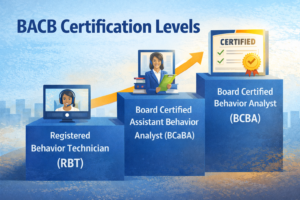
The BACB is responsible for certifying professionals at multiple levels:
-
Registered Behavior Technician® (RBT®)
-
Board Certified Assistant Behavior Analyst® (BCaBA®)
-
Board Certified Behavior Analyst® (BCBA®)
-
Board Certified Behavior Analyst – Doctoral® (BCBA-D®)
More on each credential:
https://www.bacb.com/about-certification/
Why Is the BACB Important?
Certification through the BACB ensures that practitioners:
-
Have met a rigorous set of academic and supervised experience requirements
-
Pass a standardized exam based on a published task list
-
Abide by an enforceable Code of Ethics
-
Stay current through continuing education requirements
This framework ensures quality control and client safety, especially in the treatment of individuals with autism, developmental disabilities, and other behavioral challenges.
How Do You Become a BCBA?
To become a Board Certified Behavior Analyst® (BCBA®), you must fulfill the following steps:
1. Meet the Educational Requirement
Complete a graduate degree (Master’s or higher) from an accredited university in behavior analysis, education, or psychology with required ABA coursework.
Details here:
https://www.bacb.com/bcba/
2. Complete Supervised Fieldwork
You need between 1,500–2,000 hours of supervised fieldwork, depending on your pathway (concentrated vs. standard). The supervision must be conducted by a qualified BCBA.
Supervision guidelines:
https://www.bacb.com/supervision-requirements/
3. Apply and Get Approved
Submit your application through the BACB Gateway portal and await approval before registering for the exam.
BACB Gateway:
https://www.bacb.com/gateway/
4. Pass the BCBA® Exam
The exam consists of 185 multiple-choice questions and covers all domains from the 5th Edition Task List, including ethics, measurement, behavior-change procedures, and more.
Task List download:
https://www.bacb.com/task-lists/ 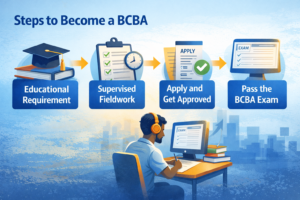
What’s on the BCBA® Exam?
The exam is based on the 5th Edition Task List, which includes the following key domains:
-
Measurement, Data Display, and Interpretation
-
Experimental Design
-
Behavior-Change Procedures
-
Ethical and Professional Conduct
-
Assessment
-
Foundations of Behavior Analysis
-
Supervision and Personnel Management
Free glossary and definitions (a great study tool):
https://www.bacb.com/wp-content/uploads/2020/05/BCBA-and-BCaBA-Task-List-5th-ed-Glossary_200812.pdf
Tips to Pass the BCBA Exam
Many candidates fail the BCBA exam on the first attempt due to poor preparation strategy. Use these exam tips:
-
Use task-list-aligned study guides (check the official BACB Task List above)
-
Practice with exam-style questions (mock tests, flashcards, scenario drills)
-
Don’t just memorize terms — learn to apply concepts to real-world case scenarios
-
Focus heavily on reinforcement procedures, data interpretation, and ethics — these make up a large portion of the exam
-
Review real-world examples often and teach them to someone else — if you can explain it, you understand it
Recommended resource with mock questions:
https://abatechnologies.com/media/BCBA-Mock-Exam-Practice
Key Resources and Study Tools
Here are some frequently recommended study aids:
-
BACB Handbook:
https://www.bacb.com/wp-content/uploads/BACB_CertificantHandbook_2401.pdf -
BACB Ethics Code:
https://www.bacb.com/ethics-code/ -
Mock Exams (ABA Technologies):
https://abatechnologies.com/store/bcba-mock-exam -
Flashcards (Behavior Analyst Study):
https://www.behavioranalyststudy.com/ -
Study Guides on Task List Items (free & paid):
https://www.studyaba.com/
Final Thoughts
The Behavior Analyst Certification Board plays a foundational role in the ABA field. Whether you’re just starting your journey or deep into exam prep, understanding how the BACB works — and what it expects — is crucial.
With a clear roadmap, reliable study resources, and plenty of practice, you’ll not only pass the BCBA exam but also become a confident and ethical behavior analyst.
If you’re just getting started, your next steps might include downloading the BACB Handbook, reading the Task List, and mapping out your supervised experience timeline.



