
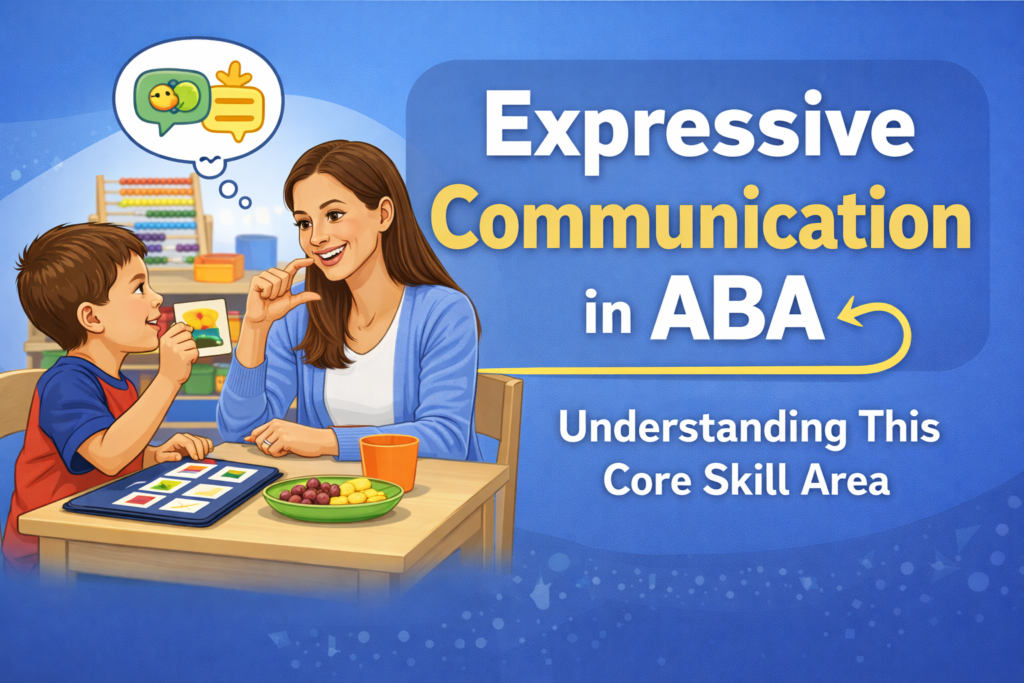
Expressive communication is a core skill area in applied behavior analysis (ABA) and a frequent focus of assessment, goal writing, and intervention planning. Many ABA students and BCBA® candidates know it involves a learner producing a message, but feel unsure what counts as expressive language, how it differs from receptive skills, or how it is taught systematically in ABA programs.
This practical guide explains expressive communication in clear, everyday language. You will learn the definition, common examples, teaching strategies, and how this concept appears on the BCBA exam and in real clinical practice.
What Is Expressive Communication in ABA?
Definition (task-list style)
Expressive language refers to a person’s ability to send information to others by producing a communicative response.
In ABA, this includes any behavior that allows an individual to express wants, needs, thoughts, or information to another person.
This communication output may occur through:
-
Vocal speech
-
Sign language
-
Gestures
-
Picture-based systems
-
Speech-generating devices
The defining feature is that the learner is actively producing a response, rather than responding to someone else’s instruction.
Expressive Communication vs Receptive Communication
This distinction is commonly tested on the BCBA exam.
Expressive communication
-
Involves producing a response
-
Examples include requesting, labeling, and answering questions
Receptive communication
-
Involves responding to information from others
-
Examples include following directions or identifying objects when named
Exam tip:
If the learner is sending information, the skill is expressive.
If the learner is receiving information, the skill is receptive.
Why Expressive Language Skills Matter in ABA
Developing expressive language skills is critical because effective communication:
-
Reduces frustration
-
Decreases problem behavior
-
Supports independence
-
Improves social interaction
Many challenging behaviors occur when individuals lack appropriate ways to communicate. Teaching functional communication responses provides meaningful alternatives to problem behavior.
Forms of Expressive Language Output
Expressive language is not limited to spoken language.
Vocal responses
-
Spoken words or phrases
-
Vocal approximations
Nonvocal responses
-
Pointing or gesturing
-
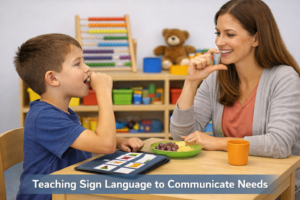
Sign language
Augmentative and alternative communication (AAC)
-
Picture Exchange Communication System (PECS)
-
Communication boards
-
Speech-generating devices
ABA programs prioritize functional communication, regardless of the form used.
Examples of Expressive Communication Skills
Common goals related to expressive communication include:
-
Requesting preferred items or activities
-
Labeling objects or actions
-
Answering questions
-
Expressing emotions
-
Participating in conversations
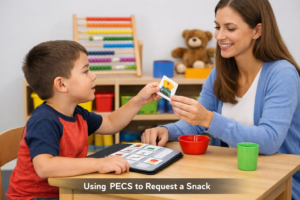
For example, a learner who hands over a picture to request a snack is demonstrating expressive language, even without spoken language.
Teaching Expressive Communication in ABA
Instruction is systematic and data driven.
Common teaching strategies include:
-
Prompting and prompt fading
-
Reinforcement of communicative responses
-
Shaping approximations toward the target response
-
Error-reduction procedures
-
Natural environment teaching
The goal is to increase independent, functional communication across people, settings, and materials.
Expressive Communication and Functional Communication Training (FCT)
Functional Communication Training is frequently used to teach appropriate communication responses that replace problem behavior.
In FCT:
-
The function of problem behavior is identified
-
A communicative response that serves the same function is selected
-
Appropriate communication is reinforced consistently
This highlights the close relationship between expressive language skills and behavior reduction.
Everyday Example
A child screams when they want a break from work.
Through intervention, the child is taught to hand over a “break” card instead. Over time, screaming decreases while appropriate communication increases.
This is a clear example of teaching expressive language to replace problem behavior.
Common Mistakes to Avoid
ABA students often make these errors:
-
Focusing only on speech instead of communication function
-
Teaching expressive skills without receptive prerequisites
-
Reinforcing prompted responses without fading prompts
-
Failing to generalize communication across settings
Effective programs emphasize function, independence, and generalization.
How Expressive Communication Appears on the BCBA Exam
BCBA exam questions may ask you to:
-
Identify whether a skill is expressive or receptive
-
Select appropriate teaching strategies
-
Choose communication responses that match behavioral function
Key phrases often include:
-
“Requesting” or “labeling”
-
“Communicating wants or needs”
-
“Alternative response to problem behavior”
Quick Study Checklist
Before the exam or clinical use, make sure you can:
-
Define expressive communication clearly
-
Distinguish expressive and receptive communication
-
Identify multiple forms of communication output
-
Select appropriate teaching strategies
-
Apply these concepts to real-world scenarios
Final Thoughts
Expressive communication is a foundational skill area in ABA and a critical focus of effective intervention.
By teaching learners how to communicate in functional and appropriate ways, practitioners support independence, reduce problem behavior, and improve quality of life. For BCBA candidates, a clear understanding of expressive communication strengthens both exam performance and clinical decision-making.



