
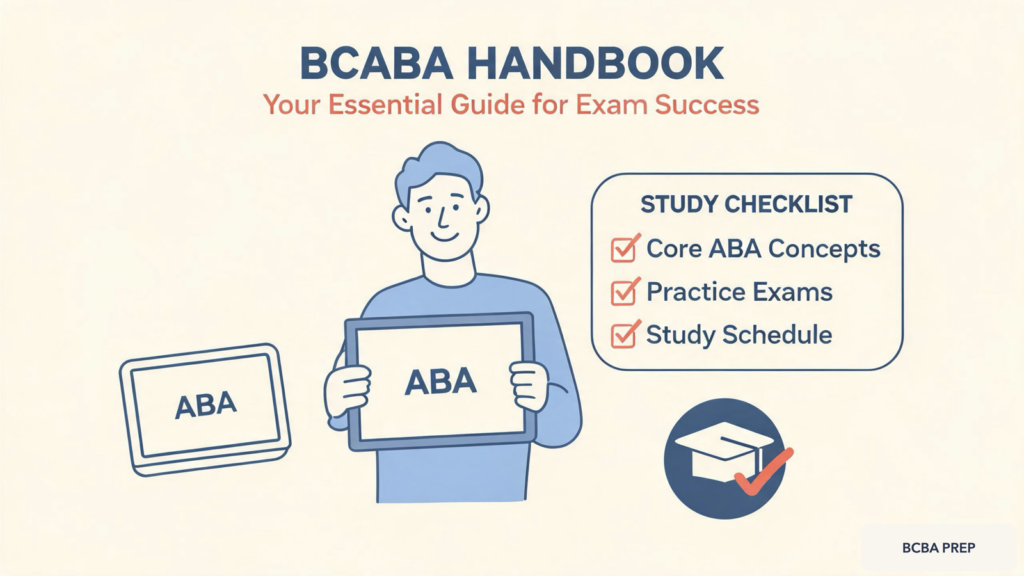
What Is the BCABA Handbook?
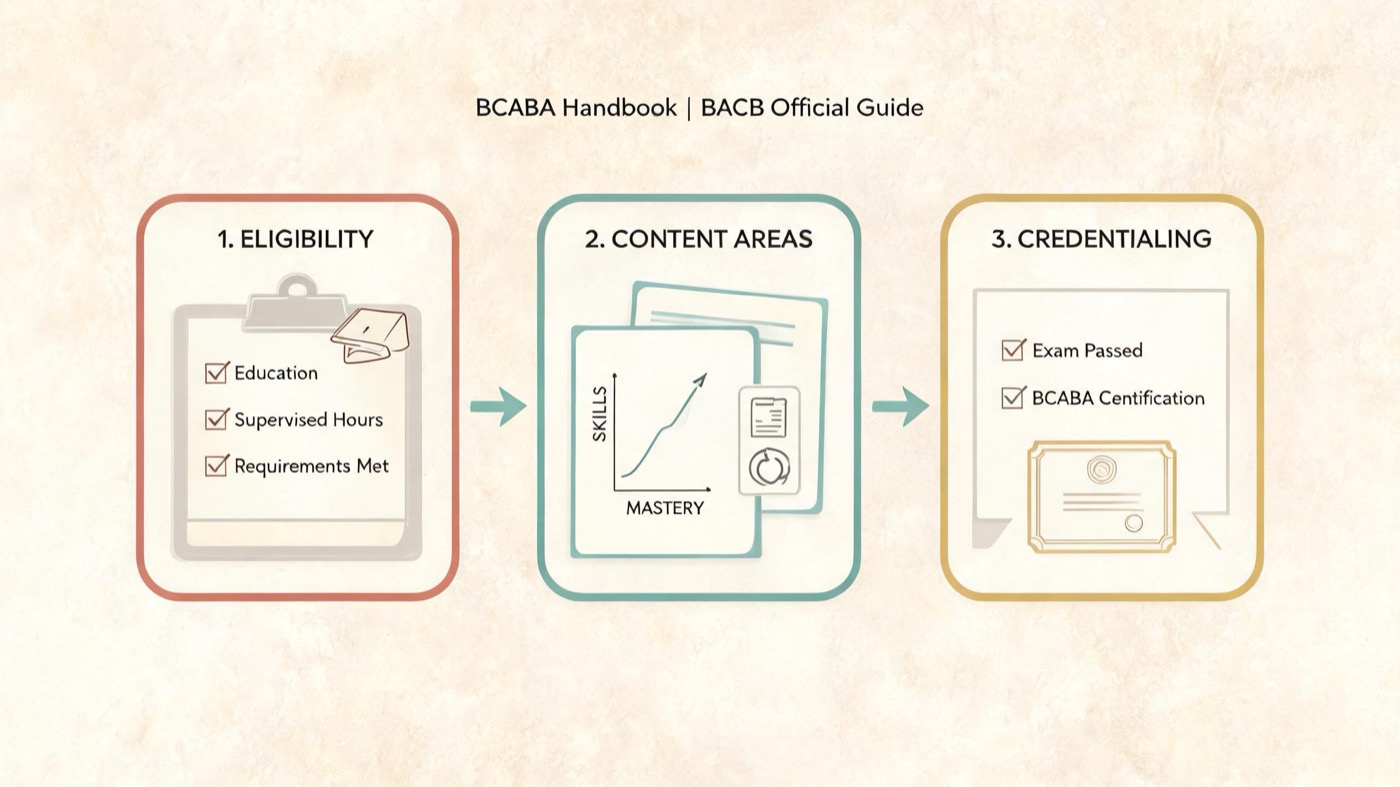
The BCABA handbook is the official guide published by the Behavior Analyst Certification Board (BACB). It outlines everything you need to know about the Board Certified Assistant Behavior Analyst credential, including eligibility, the task list, ethical guidelines, and supervision requirements. This handbook is your primary source for exam content and should be the foundation of your study plan.
Table of Contents
- What Is the BCABA Handbook?
- Key Content Areas in the BCABA Handbook
- Real ABA Examples from the Handbook
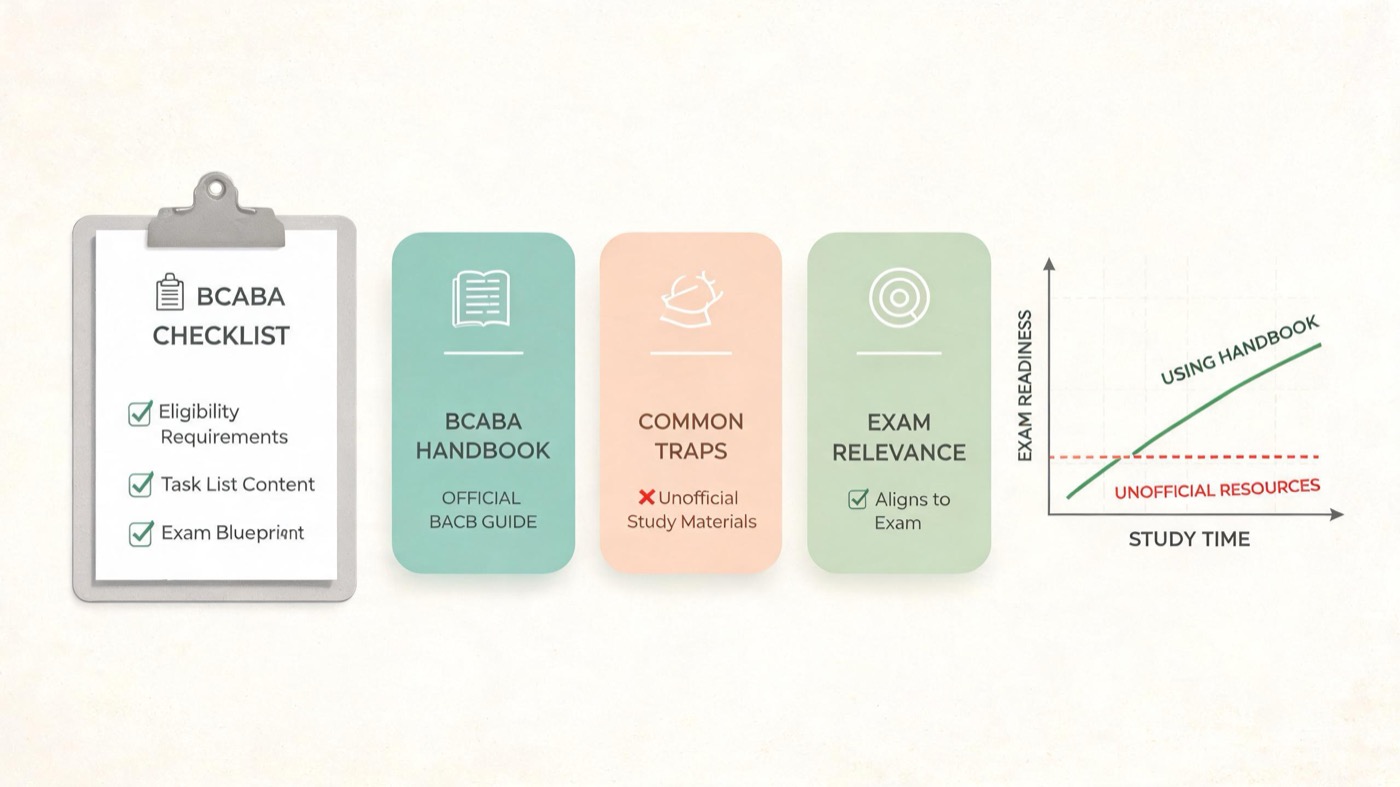
- Exam Relevance and Common Traps
- Quick Checklist for BCABA Exam Prep
- Summary and Next Steps
Purpose and Audience
The handbook is designed for candidates pursuing the BCABA certification. It clarifies the scope of practice for assistant-level behavior analysts and details the BACB task list that drives exam questions. You will also find information on supervised fieldwork hours, ethics code references, and how to maintain certification. Treat this document as your roadmap.
How It Differs From the BCBA Handbook
While both handbooks come from the BACB, the BCABA version focuses on assistant-level responsibilities. The task list emphasizes measurement, assessment, and implementation under supervision, whereas the BCBA handbook includes more advanced concepts like experimental design and program supervision. The supervision requirements also differ, with BCABA candidates needing fewer total hours. Knowing these distinctions will help you target your study time efficiently.
Key Content Areas in the BCABA Handbook
Measurement and Data Collection
You must be able to define and select appropriate measures such as frequency, duration, latency, and interresponse time. For example, if a behavior occurs rapidly and briefly, frequency may be the best choice. The exam often asks which measurement procedure to use in a given scenario. Practice by looking at real data sets and choosing the measure that aligns with the behavior’s characteristics.
Assessment and Function Identification
The handbook covers functional assessment methods: indirect assessment (interviews, checklists), descriptive assessment (ABC data collection in natural settings), and functional analysis (controlled conditions to isolate function). Scenario-based questions will test your ability to recommend the most appropriate method. For instance, when a behavior occurs frequently and safely, a brief functional analysis might be used; when ethical concerns arise, descriptive assessment is preferred.
Intervention and Behavior Change Procedures
Core intervention strategies include positive reinforcement, negative reinforcement, punishment, extinction, and differential reinforcement. The handbook emphasizes ethical implementation: always choose the least intrusive procedure that is likely to be effective. A common exam item involves identifying the reinforcement schedule or discriminating between reinforcement and punishment in a vignette.
Real ABA Examples from the Handbook
Example 1: Reducing Disruptive Behavior in a Classroom
Antecedent: Teacher announces a transition to a less preferred task (math worksheet). Behavior: Student yells “No!” and throws pencil. Consequence: Teacher provides attention by reprimanding the student. Hypothesized function: Escape from the task, with attention as a secondary reinforcer. Using the handbook, the intervention might include teaching a replacement request (e.g., “Break, please”) and providing attention for compliance.
Example 2: Increasing Hand Raising
Antecedent: Teacher asks a question to the group. Behavior: Student raises hand. Consequence: Teacher calls on the student. Function: Access to attention. A common exam trap is confusing positive reinforcement (adding attention) with negative reinforcement (removing something aversive). Here, attention is added, so it is positive reinforcement. The handbook guides you to reinforce hand raising consistently while ignoring other bids.
Example 3: Self-Injurious Behavior (SIB) and Automatic Reinforcement
Antecedent: Child is alone in a quiet room. Behavior: Head-slapping. Consequence: Immediate sensory stimulation (tactile or auditory). Function: Automatic (sensory) reinforcement. When no social consequence is apparent, consider automatic reinforcement. The handbook suggests conducting a functional analysis with an alone condition to confirm. Intervention may involve providing alternative sensory stimulation or enriching the environment.
Exam Relevance and Common Traps
Misunderstanding Function vs. Topography
The exam focuses on why behavior occurs (function), not just how it looks (topography). For instance, two students may both scream, but one screams for attention and the other to escape. The handbook repeatedly emphasizes function-based interventions. Never choose an answer that only describes the form of behavior without considering its purpose.
Overlooking Supervision Requirements
A frequent mistake is ignoring the specific supervision hours and documentation needed. The BCABA handbook specifies a minimum number of supervised fieldwork hours and the percentage of hours that must be unrestricted. Candidates often confuse these with BCBA requirements. Track your hours carefully using BCBA-approved forms to avoid certification delays.
Confusing Ethics Guidelines
The handbook references the BACB Ethics Code for Behavior Analysts. Vignettes may present ethical dilemmas involving client autonomy, informed consent, or dual relationships. Always prioritize the client’s welfare and the least restrictive intervention. For example, using a punishment procedure without first trying reinforcement-based strategies is unethical.
Quick Checklist for BCABA Exam Prep
Use this checklist to ensure you are ready:
- Download the latest BCABA handbook from the BACB website and read it cover to cover.
- Review the task list and identify your weaker areas: measurement, assessment, intervention, ethics, or supervision.
- Complete at least 3-4 full-length practice exams under timed conditions.
- Reinforce learning with real-world examples by writing ABC analyses for behaviors you encounter in your work.
- Create flashcards for key terms (e.g., functions, schedules, differential reinforcement).
- Join a study group or discuss scenarios with a colleague to sharpen your clinical judgment.
- Verify your supervision hours meet the BCABA requirements and document them correctly.
- Practice identifying ethical violations in short vignettes using the Ethics Code.
Summary and Next Steps
The BCABA handbook is your essential study tool. It defines the task list, ethical obligations, and supervision standards. By focusing on measurement, function-based assessment, and ethical intervention, you will build a strong foundation for the exam. Use the examples and traps above to refine your critical thinking. For more practice, check out our BCABA requirements guide and explore the official BACB BCABA page for additional resources. Start applying these concepts today to boost your confidence and pass the exam.


