
What Are BDS Modules in ABA?
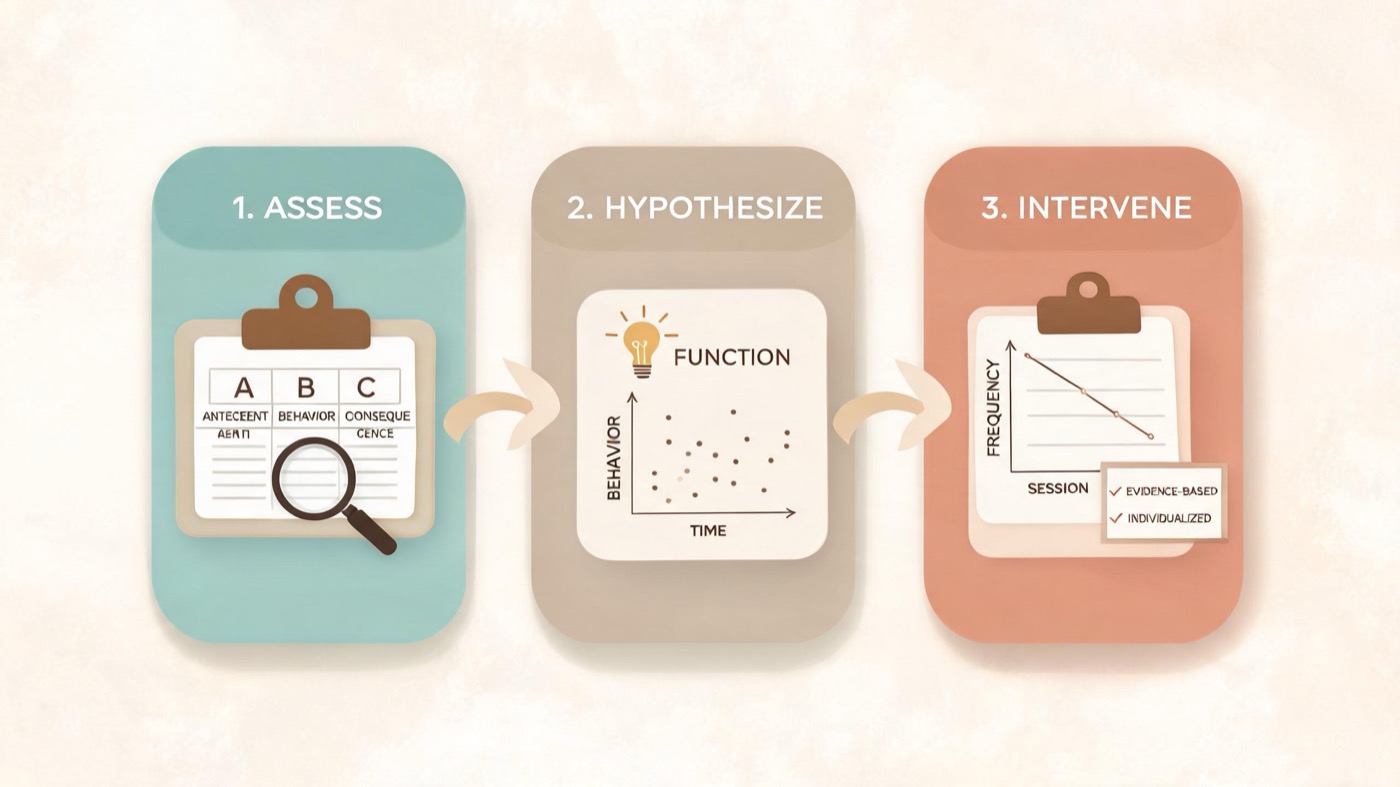
BDS modules ABA refer to a structured framework known as Behavioral Diagnostic and Support (BDS). This system provides a systematic method for assessing challenging behaviors, generating hypotheses about their function, selecting evidence-based interventions, and monitoring progress. Unlike generic functional behavior assessments (FBAs), BDS modules follow a predefined, modular sequence that enhances consistency and replicability.
Table of Contents
- What Are BDS Modules in ABA?
- Worked ABA Examples Using the BDS Module Framework
- Exam Relevance and Common Traps
- Quick Checklist for Applying BDS Modules
- Additional Exam Traps: Misinterpreting BDS Modules
- Summary and Next Steps
Definition and Core Components
A BDS module is a step-by-step protocol that guides practitioners from initial data collection through intervention evaluation. The core components include:
- Diagnostic assessment: Gathering ABC (antecedent-behavior-consequence) data through direct observation and record review.
- Hypothesis generation: Identifying the likely function of the behavior (e.g., access to tangibles, escape, attention, automatic reinforcement).
- Intervention selection: Choosing function-based strategies such as functional communication training or differential reinforcement.
- Monitoring: Tracking behavior change and adjusting the plan as needed.
Each component is grounded in applied behavior analysis principles, ensuring that interventions are both effective and ethically sound.
How BDS Modules Fit into the ABA Process
BDS modules typically come into play after an initial FBA has identified a target behavior but before a full behavior intervention plan (BIP) is written. They serve as a bridge, providing a structured way to confirm the hypothesized function and test potential interventions. This modular approach is especially useful in settings like schools or clinics where multiple team members collaborate on assessment and intervention.
Worked ABA Examples Using the BDS Module Framework
Applying the BDS module framework to real-world scenarios helps solidify understanding. Below are three concrete examples illustrating the step-by-step process.
Example 1: Aggression Toward Peers
ABC Data: Antecedent – a peer takes a toy from the child; Behavior – the child hits the peer; Consequence – the peer leaves, and the child retrieves the toy. Hypothesized function: Access to tangible items (and possibly attention). Using the BDS module, the diagnostic phase confirms social positive reinforcement. The intervention plan includes functional communication training (teaching the child to request a turn) and differential reinforcement of alternative behavior (DRA) to reduce aggression.
Example 2: Elopement During Transitions
ABC Data: Antecedent – teacher says “time to clean up”; Behavior – student runs out of the classroom; Consequence – aide follows and brings the student back. Hypothesized function: Escape from non-preferred tasks. The BDS module guides the team to implement a visual schedule, offer choices (e.g., which task to complete first), and modify consequences (e.g., use a token system for completing transitions).
Example 3: Vocal Stereotypy During Independent Work
ABC Data: Antecedent – student is given a worksheet; Behavior – student makes repetitive humming sounds; Consequence – teacher ignores the humming, and the student continues. Hypothesized function: Automatic reinforcement (sensory stimulation). The BDS module suggests teaching an alternative sensory activity (e.g., squeezing a stress ball) and scheduling noncontingent access to preferred sensory input at intervals.
Exam Relevance and Common Traps
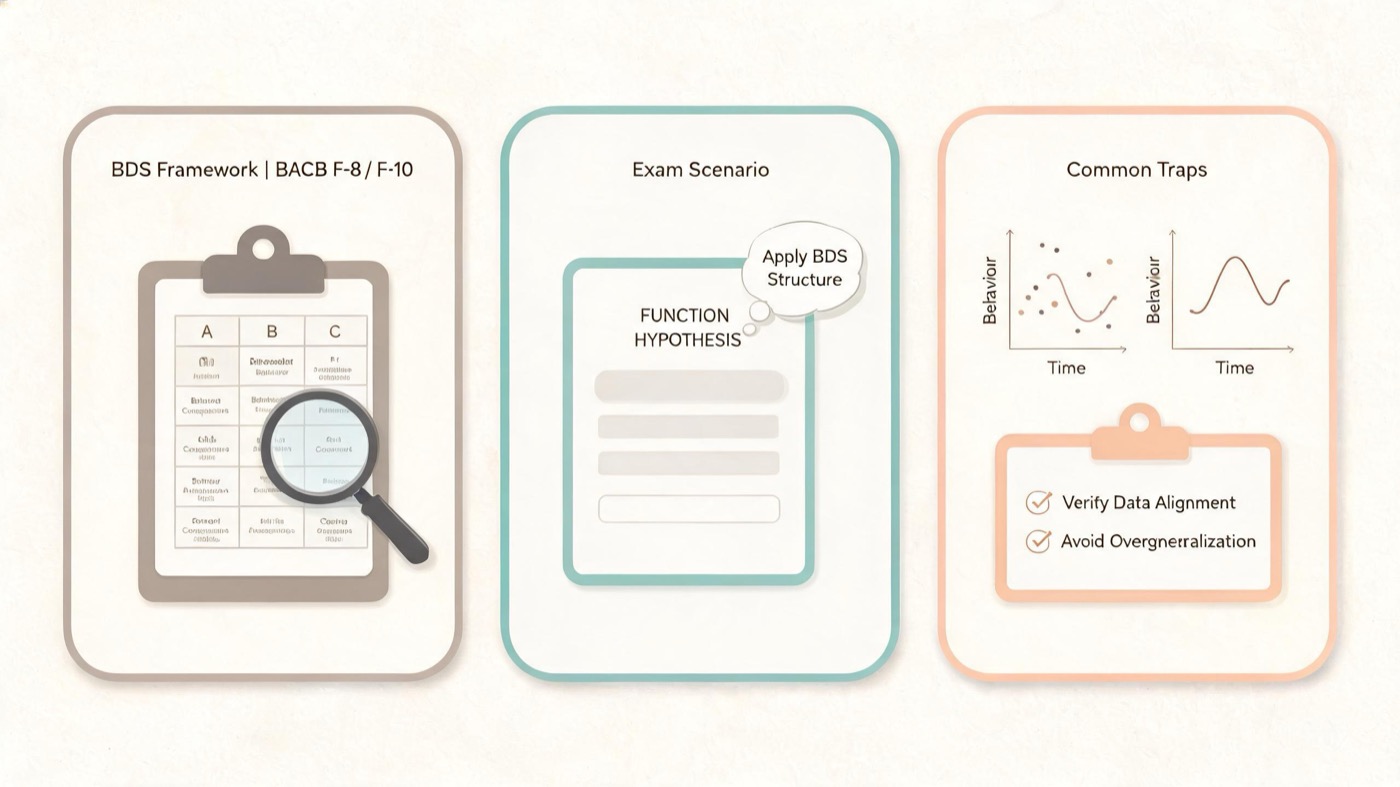
For BCBA candidates, understanding BDS modules is essential because scenario-based questions often test the ability to apply this structured framework. The BACB Task List (e.g., items F-8 and F-10) expects you to conduct function-based assessments and design interventions. Here is how BDS modules appear on the exam and the pitfalls to avoid.
How BDS Modules Appear on the BCBA Exam
Exam questions may present a brief case description and ask you to identify the next step in the BDS process, the hypothesized function, or an appropriate intervention. For example: “A BCBA collects ABC data showing that a client’s screaming occurs when asked to do math problems and stops when the task is removed. Using the BDS framework, which function should the intervention target?” Answer: escape from demands.
Common Traps to Avoid
- Confusing BDS with a curriculum list: BDS is a process, not a set of pre-written lessons.
- Skipping the diagnostic hypothesis phase: Jumping directly to intervention without confirming the function is a common error.
- Applying BDS without an FBA: BDS modules build on initial FBA data; they are not a replacement.
- Using a one-size-fits-all approach: BDS requires individualization based on the client’s unique behavior and context.
Quick Checklist for Applying BDS Modules
Use this actionable checklist to guide your assessment and intervention planning, whether for exam recall or real-world practice:
- ☐ Collect ABC data across multiple settings and times.
- ☐ Identify the behavior’s function using data patterns.
- ☐ Write a clear, testable hypothesis statement (e.g., “The behavior is maintained by access to tangibles”).
- ☐ Select interventions directly matched to the hypothesized function (e.g., FCT for attention, DRA for escape).
- ☐ Monitor data daily and adjust if the behavior does not improve within 1–2 weeks.
- ☐ Collaborate with caregivers and staff to ensure consistency across environments.
Additional Exam Traps: Misinterpreting BDS Modules
Beyond the common pitfalls, BCBA candidates often misstep by thinking BDS modules are only for severe problem behaviors. In reality, BDS can be applied to any challenging behavior, including skill deficits. Another trap is over-relying on indirect assessments (e.g., interviews) rather than direct observation. Remember: BDS emphasizes objective data. Direct observation is key.
Summary and Next Steps
BDS modules ABA provide a structured, evidence-based approach to assessing and intervening with challenging behaviors. They bridge the gap between initial FBA and full BIP, ensuring interventions are function-based and individualized. For BCBA candidates, mastering the BDS framework is crucial for exam success and effective practice. To deepen your understanding, explore functional behavior assessment methods and try our BCBA mock exam to test your skills. For more on behavior functions, refer to the BACB website.


