
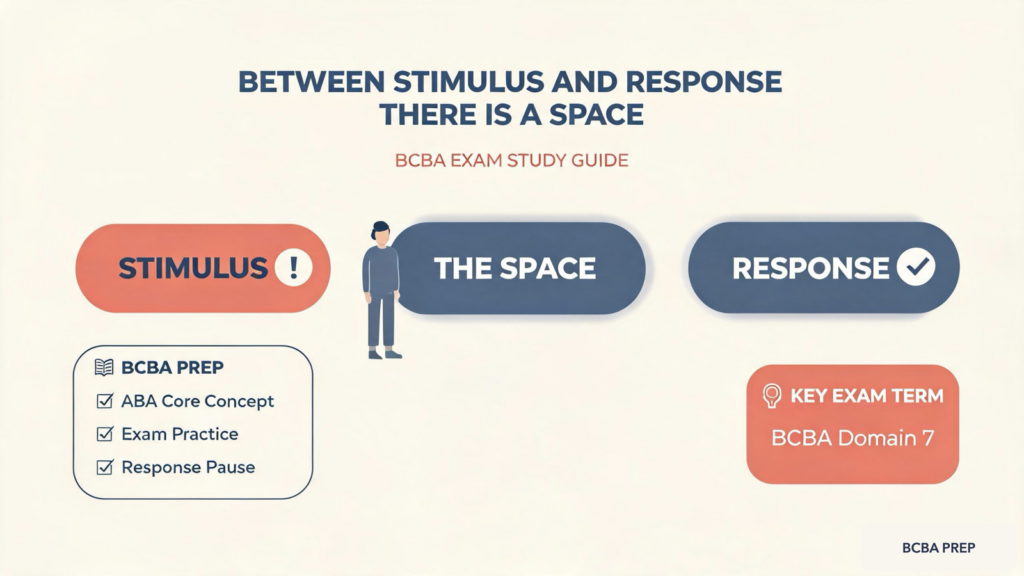
Introduction to ‘Between Stimulus and Response There Is a Spa
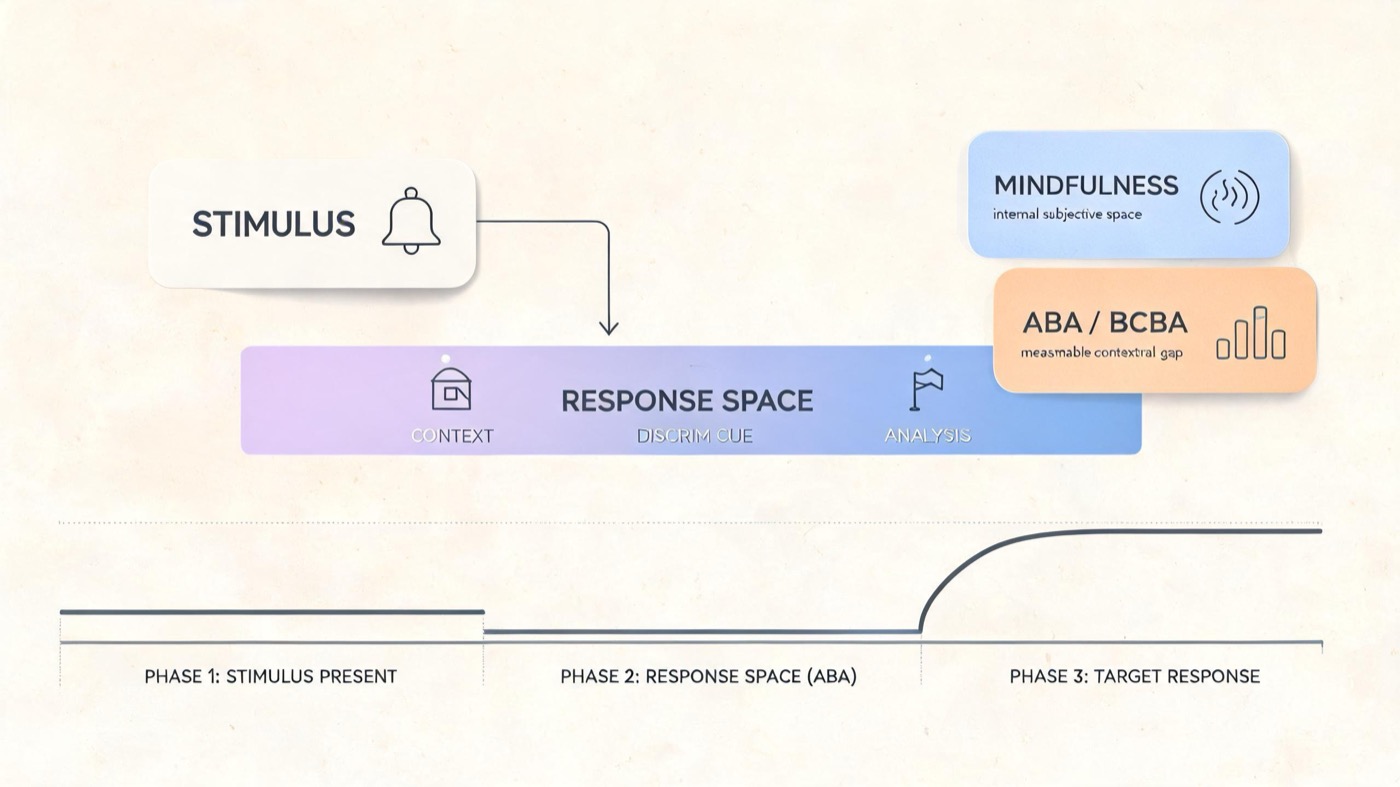
The phrase ‘between stimulus and response there is a space’ is often attributed to Viktor Frankl and is widely used in mindfulness and cognitive psychology. However, in applied behavior analysis (ABA), this quote takes on a distinct meaning that is critical for BCBA exam success. Rather than pointing to a moment of free will or conscious choice, the ‘space’ in ABA refers to the environmental and behavioral events that link an antecedent stimulus to a response. This article translates the quote into behavior-analytic terms, provides three worked ABC examples, highlights common exam traps, and offers a quick checklist to solidify your understanding. Whether you are studying stimulus control, functional analysis, or the ABC model, grasping this concept will help you answer exam questions accurately.
Table of Contents
- Introduction to ‘Between Stimulus and Response There Is a Spa
- What Does This Quote Mean in Behavior Analysis?
- Worked ABA Examples: From Stimulus to Response
- Exam Relevance and Common Traps
- Quick Checklist for BCBA Candidates
- Summary: Bridging the Quote to Behavior Analysis
- References
What Does This Quote Mean in Behavior Analysis?
Stimulus and Response in ABA
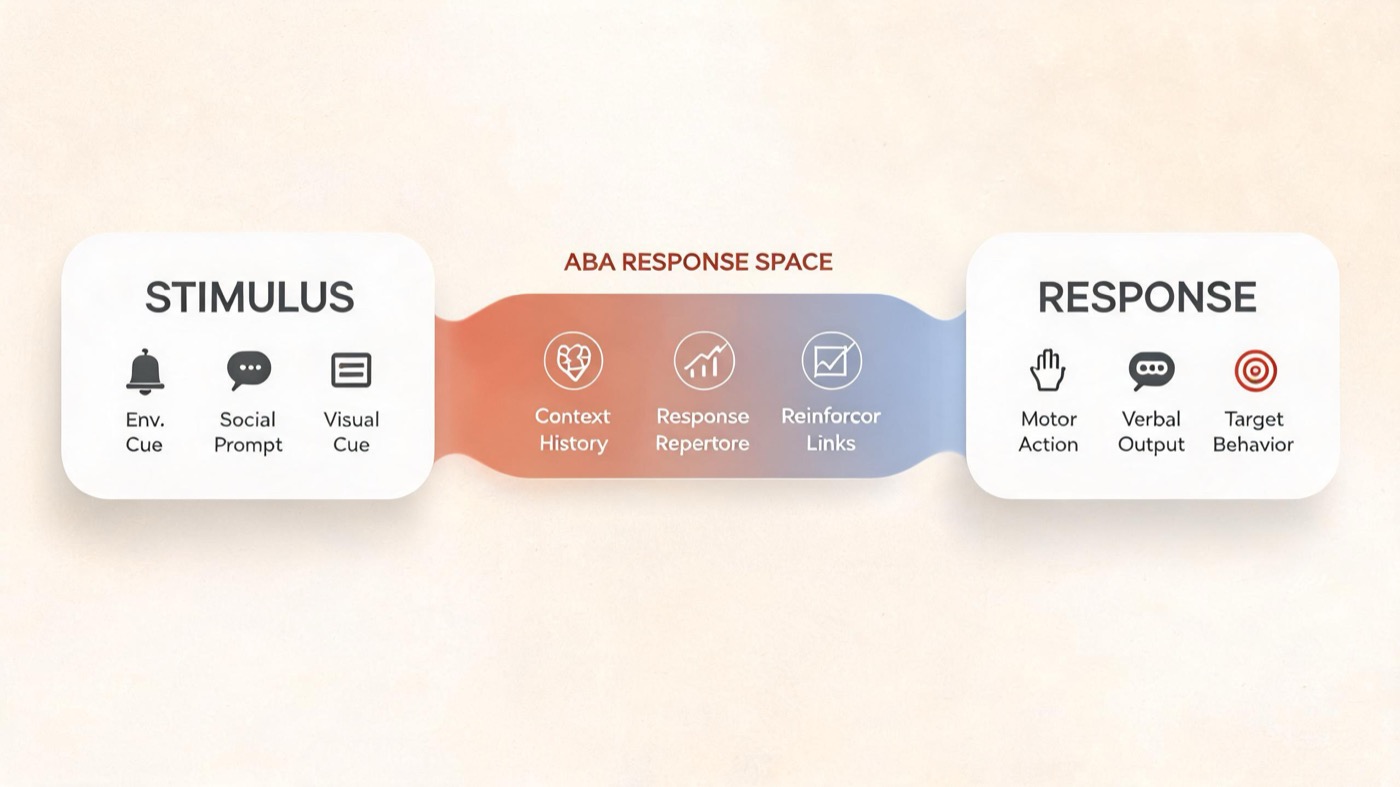
In behavior analysis, a stimulus is any environmental event that can affect behavior, and a response is an action by the organism. The ‘space’ between them is not a mental gap but the entire context of antecedent–behavior–consequence (ABC) relations. For example, a discriminative stimulus (SD) signals that a particular response will produce reinforcement. The ‘space’ includes the individual’s learning history, motivating operations, and the current contingencies. It is not a pause for reflection but the sum of environmental influences that determine whether a response occurs.
The ‘Space’ as an Antecedent–Behavior–Consequence Link
The ABC model is the backbone of ABA. The antecedent (A) sets the stage, the behavior (B) occurs, and a consequence (C) follows that affects future behavior. The ‘space’ between stimulus and response is essentially the A-B-C chain. For instance, when a teacher presents a math worksheet (antecedent), a student may comply or refuse based on past consequences. The ‘space’ includes discrimination training, reinforcement schedules, and motivating operations that alter the value of the consequence. For a deeper look at how antecedents function, see our guide on antecedent ABA exam traps.
Worked ABA Examples: From Stimulus to Response
Example 1: Escape from Demands
Antecedent: Teacher gives a math worksheet. Behavior: Student throws pencil. Consequence: Teacher removes worksheet. Hypothesized function: Escape. The ‘space’ here is the student’s history of escaping similar tasks—previous instances of problem behavior were reinforced by removal of demands. The teacher’s instruction (SD) sets the occasion for escape-maintained behavior. Understanding this ‘space’ helps behavior analysts design interventions that teach replacement behaviors, such as asking for a break.
Example 2: Access to Attention
Antecedent: Parent is on the phone. Behavior: Child says ‘Mommy’ repeatedly. Consequence: Parent looks and responds. Hypothesized function: Attention. The ‘space’ involves the child’s learning history where vocalizations produced parental attention. The motivating operation is deprivation of attention. This example illustrates how the ‘space’ is not a cognitive decision but a history of reinforcement. For more on the four functions of behavior, check our functions of behavior guide.
Example 3: Automatic Reinforcement
Antecedent: Alone in room. Behavior: Hand-flapping. Consequence: Sensory stimulation. Hypothesized function: Automatic reinforcement. The ‘space’ here is the sensory feedback loop—the behavior itself produces reinforcement. No other person is involved. The ‘space’ includes the sensory stimulus and the immediate reinforcing consequence. This highlights that behavior can be maintained by consequences that are not socially mediated.
Example 4: Compliance with Instructions
Antecedent: Therapist says ‘Touch your nose.’ Behavior: Child touches nose. Consequence: Therapist delivers praise and a token. Hypothesized function: Access to tangible/attention. The ‘space’ includes discrimination training where the child learned that the instruction is an SD for reinforcement. Past teaching sessions shaped the response, and the current consequence maintains it. The ‘space’ is the entire instructional history.
Exam Relevance and Common Traps
How the Quote Appears on the BCBA Exam
The BCBA exam may present the quote in questions about stimulus control, discrimination, or functional analysis. For instance, a scenario might describe a behavior occurring after a specific antecedent, and the exam asks what the ‘space’ represents. The correct answer always points to environmental variables, not internal processes. Questions may also ask how to manipulate the ‘space’ to change behavior—for example, by altering antecedents or consequences. Expect items related to the Task List items on behavior change procedures and environmental variables. Our BCBA exam prep guide covers these topics in more depth.
Common Mistakes: Confusing ‘Space’ with Free Will or Cognition
A major pitfall is interpreting the ‘space’ as a moment for conscious decision-making, mindfulness, or free will. Behavior analysis rejects mentalistic explanations. The ‘space’ is always explained by environmental variables: antecedent stimuli, reinforcement history, motivating operations, and consequences. Do not fall for answer choices that mention cognitive processes like ‘thinking about options’ or ‘choosing.’ Instead, look for answers that reference learning history, stimulus control, or contingency. Another common error is forgetting that the ‘space’ includes automatic reinforcement—behavior can be maintained without social mediation.
Quick Checklist for BCBA Candidates
Use this checklist when analyzing any scenario involving stimulus and response:
- Identify the antecedent stimulus (what happened right before the behavior?).
- Describe the behavior in observable terms.
- Specify the consequence that immediately follows.
- Determine the function (escape, attention, tangible, automatic).
- Consider the learning history—how was this behavior reinforced in the past?
- Ask: What motivating operations are present (deprivation, satiation)?
- Check for stimulus control—is the behavior more likely in the presence of that specific antecedent?
- Avoid mentalistic explanations; keep the focus on environmental variables.
Summary: Bridging the Quote to Behavior Analysis
The quote ‘between stimulus and response there is a space’ is a powerful reminder that behavior is not automatic but is shaped by a history of consequences. In behavior analysis, this ‘space’ is filled with ABC contingencies, discrimination training, and motivating operations. For the BCBA exam, always translate the quote into environmental terms: the space is the reinforcement history and current antecedents that evoke behavior. By using the ABC model and avoiding mentalistic traps, you can answer related questions confidently. Apply this perspective to real-life scenarios, and you will deepen your understanding of how behavior works. For additional practice, our free BCBA mock exam questions include items on stimulus control and functional analysis.


